Home Blog Page 39

TradeMark EA boosts COVID19 fight with Personal Protective Equipment for Elegu Border Agencies and Informal Traders.

0

Regional trade facilitating agency TradeMark East Africa has today handed over Personal Protective Equipment (PPE) to Elegu One Stop Border Post (OSBP) frontline staff and informal cross border traders.

The delivery of PPEs at Elegu OSBP comes at the back of concentrated efforts undertaken by the government of Uganda and its partners to further curb the spread of the novel COVID-19 virus that caused havoc across the world.

The PPE presented at Elegu OSBP were funded by Danish International Development Agency (DANIDA) through TradeMark East Africa’s Safe Trade Emergency Facility. Other OBSPs that have already benefited from this Safe Trade initiative are Busia and Mutukula.

Ulrik Jorgensen, Counsellor and Teamleader Growth Team at the Denmark in Uganda Embassy and Damali Ssali, the acting country director for TradeMark East Africa, Uganda delivered the PPE to Elegu OSBP. On hand to receive the PPE was Abel Kagumire, the Commissioner Customs at Uganda Revenue Authority (URA).

The personal protective equipment provided included but not limited to hand sanitizers, hand washing stations, liquid hand washing soap, infrared thermometer, re-usable safety boots, full protective PPE, filtering face piece respirator, reusable masks, plastic face shield, disposable gloves, hand sanitiser dispensers and disinfectant spray bottles.

Abel Kagumire, the URA commissioner customs.

While receiving the PPE, Abel Kagumire, the URA commissioner customs underscored the significance of the Elegu OSBP as a strategic border for Uganda.

 “As a country, we look at Elegu border as a strategic border for growing our exports. We have a lot of agricultural produce in Uganda which is needed in South Sudan. That is why we come up with processes that help facilitate exports. We are challenging our people to add value to the products that they export so that we earn even more from South Sudan. As government agencies, we are here to facilitate trade,” Kagumire said, adding;

“We thank our partners; TradeMark East Africa and the Danish Embassy for donating this Personal Protective Equipment. Allow me confirm that this equipment received today is not for the customs team alone but for all trade facilitation agencies operating here and informal traders.”

Ulrik Jorgensen, the Counsellor and Teamleader Growth Team at the Denmark in Uganda Embassy noted that he was happy that Trade was continuing even amidst challenges such as COVID-19 and floods in Elegu.

“It is very positive to see that Trade is still progressing even amidst some difficulties. COVID-19 has affected the whole world. Many places in Europe and North America are experiencing a second wave with countries being locked down again. Fortunately, we are not seeing the same here in Uganda. This because of the efforts that Uganda has managed to put in place to contain the spread of COVID-19. Uganda is in a very good place and we are happy to continue working with you to achieve even more success.”  

The equipment presented today will enhance the safety and working condition of front-line workers in key borders, which are critical arteries of trade in and out of Uganda and her neighbours.

These PPEs are part of the Safe Trade Emergency Facility, a USD 23 million emergency program rolled out by TradeMark East Africa in the East African region in the aftermath of the Covid-19 pandemic that seeks to ensure regional economies continue to trade in a safe way, while curbing cross-border infections.

“We are handing over Personal Protective Equipment because we want to see that Safe Trade continues. People still have to trade, have to eat and live even if we are faced with COVID-19. These PPEs are for all border agencies operating here in Elegu and Informal Traders particularly Women Cross Border Traders. We have already delivered the same in Busia, Mutukula and Mirima,” Damali Ssali, the acting country director for TradeMark EA, Uganda noted, adding;

“The Safe Trade Emergency Facility that was developed by TradeMark EA and funded by our partners – Denmark includes the Safe Trade Zones. We are still in the planning of how to implement these Safe Trade Zones. The Safe Trade Zones are supposed to facilitate Informal Trade. It is not just about Formal Trade. There is a lot of Informal Trade happening in towns like Elegu, even amidst floods affecting this town. Our concept of the Safe Trade Zones is that the key markets that are near busy borders like Elegu, Mutukula and Busia should also be helped and facilitated to safely open and trade even when there is COVID-19. A lot of the people in these markets are Women and Youth. If they don’t have an income, it means also their families have no income. We have to support informal trade.”

Other interventions under the Safe Trade Emergency Facility include:  technology to enhance truck driver testing and tracking; the development and implementation of relevant protocols to enhance efficient and safe trade; supporting trade policy, standards and SPS; policy advocacy and improving e-commerce.  

President Museveni breaks ground for construction of the Gulu Logistics Hub.

0

Our Reporter.

President Yoweri Kaguta Museveni on Saturday 24th October broke ground for the construction of the Gulu Logistics Hub. The same event doubled as the ground breaking for the rehabilitation of the Tororo-Gulu railway.

Other dignitaries that attended this landmark ceremony included Uganda’s Deputy Speaker, Hon Jacob Oulanyah, Cabinet Minister of Works and Transport, Gen. Edward Katumba Wamala, and European Union (EU) Ambassador to Uganda, Attilio Pacifici among others.

With support from European Union (EU) and the UK`s Foreign and Commonwealth Development Office (FCDO), TradeMark East Africa (TMEA) together with Ministry of Works and Transport and Uganda Railways Cooperation commenced construction in March 2020 of Euros 7.76M (about 33 billion Uganda Shillings) Trade Logistics Hub in Gulu, a move expected to stimulate trade in the region. The project currently at 25 per cent completion is expected to be completed before the end of 2021.

The Gulu Logistics Hub is expected to contribute to reduced barriers to trade for both Northern Uganda and the neighbouring countries of South Sudan and the Democratic Republic of Congo. The Gulu Logistics Hub (GLH) will serve the trade corridors of Kampala – Gulu – Elegu/Nimule – Juba Trade Corridor; and Gulu – Pakwach Goli/Pader/Lira/Vurra DRC Trade Corridor. The hub will be able to handle more than 500,000 containers at a time.

The logistics hub is located on a 24.1 acres piece of land in Layibi division, Gulu Municipality which was allocated by the Uganda Railways Corporation. The hub is located adjacent to the current Gulu railway station and connects to the main roads to South Sudan and Kampala.

Major features of Gulu logistics hub in Uganda will include container and break-bulk, handling and storage facilities, space for stakeholders dealing with freight transport (freight forwarders, shippers and transport operators) and the provision of accompanying services such as customs inspections, tax payment, maintenance and repair, banking and information communication technology.

Following the ground breaking of these two flagship projects, President Museveni noted that the entire infrastructure such as roads, railway, logistics hub, and electricity that is being established in Northern Uganda and the rest of the country is for making it easier for Ugandans to travel and also make it cheaper for them to do business.  

“We have invested massively in the road network. The roads are for small cargo and that is for the short term. The real medicine to cargo transportation is the railway. When you transport cargo by road, it becomes very expensive. Transporting a 40 ft. container from Kampala to Mombasa by road using a lorry would cost USD 3600. But, if you transport the same cargo by railway, you spend about USD 1800, which is almost half when compared to road transport,” President Museveni said, adding;

“This reduction in transportation costs by almost half is when you are using the old (metre gauge) railway line.  If we are to use the new Standard Gauge Railway (SGR), it will be much cheaper. We have already worked on the roads. We are now repairing the old railway and establishing more infrastructure. We will also do the new railway (SGR).”

The EU Ambassador to Uganda, Attilio Pacifici, commented: “The Gulu Logistics Hub will help in the consolidation and exportation of the goods produced from the value chains in Northern Uganda, and will also facilitate the importation and distribution of goods within Northern Uganda for the transformation and improvement and those value chains. The works on the Logistics Hub are scheduled to be completed by the end of 2021, but progress for the Government to build a 2km access road to the Hub remains uncertain. It would be a pity to have the whole project delayed by a simple access road, especially if the Hub is ready to operate next year as planned.”  

Andrew Ockenden, the  Development Director for the British High Commission in Kampala noted in a recorded video that; “The UK is committed to co-fund this multi-modal transport and warehousing project that will improve the capacity of transport and infrastructure in northern Uganda. It will also serve the export markets of South Sudan and DRC. The United Kingdom is committed to supporting trade and regional integrations agendas of Uganda and the East African community both through direct engagement and also through development programs like TradeMark East Africa. Like the government of Uganda, we understand that trade is central to Uganda’s development.”

TMEA is proud to be supporting the construction of the Gulu Logistics Hub, one of the many projects under its second phase of implementation which includes Trade Logistics Clusters in Jinja & Busia, construction of the Goli/ Mahagi One Stop Border Posts (OSBP), decentralization of standards testing and Phase II of the Uganda Electronic Single Window.

The acting Country Director for TradeMark East Africa, Uganda, Damali Ssali remarked that these and other trade facilitation efforts will “contribute to creation of additional employment opportunities as investors capitalise in the transport and manufacturing sectors and export growth. About 208,000 people are currently employed in the logistics sector in Uganda, a number that could rise to 522,000 by 2030. This project will certainly contribute to this.”

“Currently there is a significant imbalance of trade to South Sudan, Northern Uganda and DRC with very little exports coming from the region. To support exporters in the region, and to create new jobs and opportunities, we need a consolidation hub for exports, especially focused on agricultural trade. The presence of such a hub would allow for better negotiating power of exporters with transport providers as exporters would be able to access several transporters all at the same location,” Damali Ssali explained.

According to a World Bank study – Uganda Diagnostic Trade Integration Study – importers in South Sudan and DRC keep supplies in bonded facilities in Kampala before bringing them into either country when needed.

However, with the assurances of shorter lead times, Uganda has seen transit volumes grow, which has led to the emergence of a distribution industry especially in Jinja and Kampala.

In essence, the operationalization of the Gulu Logistics Hub will be a great relief to both traders and consumers as they will enjoy reduced costs of transportation and lower prices, respectively.

#IncludeEveryOne: Entries’ Submission for the 2020 Digital Impact Awards Africa – #DIAA2020 kick off.

For Immediate Release.

HiPipo; the organizers of the annual Digital Impact Awards Africa have started receiving entries for the 2020 Digital Impact Awards Africa (#DIAA2020).  Digital Impact Awards Africa is Africa’s most important gathering of C-Level Executives, and senior Digital and IT executives.

The kick-off of the entries’ submission marks the start of a comprehensive entry submission and validation process that will run until 2nd November, 2020. This will be followed by release of nominations and public voting.

The #DIAA2020 grand finale is slated for the afternoon of Thursday 26th November. It will be preceded by the annual Include Everyone Summit (aka Digital and Financial Inclusion Summit) on the same day.

#DIAA2020 grand finale is scheduled for 26th November 2020 at the Kampala Sheraton Hotel. The awards gala will be the climax of the Include Everyone – Digital and Financial Inclusion Summit that will happen on the same day. This summit will explore the strategic trends and technologies that are shaping the future of Digital, IT and business. The summit theme will be “Collaboration To Advance Safety and Security Towards Sustainable Financial Inclusion”.

Digital Impact Awards Africa is a platform that promotes Digital Inclusion, Financial Inclusion and Cybersecurity. Precisely; the Awards seek to recognize, celebrate and appreciate different individuals and organizations that are spearheading the use of digital mediums to better serve their communities.

All qualifying organisations and projects are called upon to submit their entries ahead of the entry closure date of 2nd November 2020.

The summit and awards will use 3 official tags

#IncludeEveryone #DIAA2020 #LevelOneProject

Appended below is a list of categories

Ends!

Categories

  1.  Mavmica Acebooktwittermore

Africa

  1. Africa (KENYA) Outstanding Contribution to Financial Inclusion
  2. Africa (TANZANIA) Outstanding Contribution to Financial Inclusion
  3. Africa (RWANDA) Outstanding Contribution to Financial Inclusion
  4. Africa (ETHIOPIA) Outstanding Contribution to Financial Inclusion
  5. Africa (BURUNDI) Outstanding Contribution to Financial Inclusion
  6. Africa Best Fintech Innovation
  7. Africa Best Smart Device Initiative
  8. Africa Best Internet Access Initiative
  9. Africa Best Mobile Innovation for Health
  10. Africa Best Mobile Innovation for Agriculture
  11. Africa Best Mobile Innovation for Education
  12. Africa Best Mobile Innovation for Banking
  13. Africa WomenInFintech – Leadership Award (Personality)
  14. Africa Financial Inclusion – Medal of Honor (Personality)
  15. Africa Best Digital Response to Covid Impact (Community Support)
  16. Africa Best Digital Response to Covid Impact (Consumer Product and Services)
  17. Africa Best Digital Response to Covid Impact (Financial Inclusion Services)
  18. Africa Best Digital Financial Service Platform

Uganda

  1. Financial Inclusion Excellence – Diamond (Corporate 10+ Years)
  2. Financial Inclusion Excellence -Platinum (Corporate 6-9 Years)
  3. Fintech Outstanding Contribution (40Days40Fintechs) – Gold (SME- 10+ Years)
  4. Fintech Outstanding Contribution (40Days40Fintechs) – Silver (SME – 6-9 Years)
  5. Fintech Outstanding Contribution (40Days40Fintechs) – Bronze (SME -2-5 Years)
  6. Women Financial Inclusion Outstanding Contribution (Saving and Lending)
  7. Women Financial Inclusion Outstanding Contribution (Payments)
  8. Women Financial Inclusion Outstanding Contribution (Insurance)
  9. Digital Banking Excellence (Online/Web, Mobile, Social Banking)
  10. E-Commerce Excellence
  11. Agriculture Digitization Excellence (Financial Services)
  12. Agriculture Digitization Excellence (E-commerce)
  13. Green Energy Excellence Powered by Financial Inclusion.
  14. Best Digital Customer Experience (Financial Services, Telecom, IT)
  15. Best Digital Customer Experience (Utilities and Government Services)
  16. Best Brand on Social Media (Financial Services, Telecom, IT)
  17. Best Brand on Social Media (Consumer Goods)
  18. Best Brand on Social Media (Utilities, Government Services)
  19. Best Digital Powered Campaign
  20. Best Mobile Payments (Innovation)
  21. Best Cards Payments (Innovation)
  22. Best Community Banking
  23. Best Digital Awareness Initiative (Financial Literacy, Cybersecurity)
  24. Best Digital Embrace (Non-Consumer Facing Brand)
  25. Digital Brand of the Year

Cotton Development Organisation joins Uganda Electronic Single Window.

Our Reporter.

The online Cotton Grading module was last week added to the Uganda Electronic Single Window. As such, the Cotton Development Organisation (CDO) is now able to facilitate registration of ginnery, ginning and export certification, as well as Lint Quality certification online.

The Uganda Electronic Single Window is a trade facilitation platform that lets Traders, Clearing and Forwarding firms submit and process international trade documents electronically. It was launched in November 2016 by Hon Amelia Kyambadde, the cabinet minister for Trade, Industries and Cooperatives.

The Uganda Electronic Single Window project has been funded by DANIDA through TradeMark East Africa. Ministry of Trade is the lead agency while Uganda Revenue Authority (URA) is the implementation agency.

Since its launch, the Single Window platform has been rolled-out and currently being used by over 20 Ministries, Departments and Agencies (MDAs), the latest being Cotton Development Organisation.

Jolly Sabune, the managing director of Cotton Development Organisation, noted that easing doing business for Cotton stakeholders especially the ginners and lint exporters has always been CDO’s desire and the electronic single window system will benefit them in multiple ways.

“On behalf of government side, we hope to realize improved stakeholders’ compliance and enforcement. I want to reaffirm our commitment to implementing the single window system in this cotton subsector in Uganda,” Jolly Sabune said.

While confirming the addition of CDO on to the Single Window platform, Francis Koluo, the project coordinator from Ministry of Trade thanked TradeMark East Africa and DANIDA for the first seed funding of this project.

“This is an ICT project that requires continuous updates and monitoring. We had to first upgrade the ASYCUDA (Automated System for Customs and Data) were the system resides. Together with National Information Technology Authority (NITA-U), we are working on sustainability plan for Single Window,” Francis Koluo from Ministry of Trade explained.

Uganda Revenue Authority’s Ssozi Geofrey, who represented the Commissioner Customs noted that the implementation of the Single Window system has contributed to safe trade by limiting interactions through automation trade processes which were previously characterized by delays. This has come with multiple benefits including faster clearance of cargo from 14 to less than 2 days.

Damali Ssali, the acting country director for TradeMark East Africa, Uganda noted that the Uganda Electronic Single Window is currently directly facilitating six of the top ten Uganda exports. These include Coffee, Tobacco, Fisheries, and now Cotton.

“I am happy to report that this Single Window platform is now facilitating Uganda’s top six exports. It is my hope that soon; all the top ten exports will have automated systems through the Single Window. The Uganda Electronic Single Window is indeed facilitating trade through cutting costs and time involved,” Damali Ssali said, adding;

“I am very happy to actually be here to see the Cotton Development Organisation module run on Single Window. We scoped it about two to three years ago and it has taken us some time to achieve this.”

Margaret Magera, a Senior Programme Advisor at Royal Danish Embassy in Uganda noted that it is exciting to know that the government of Uganda is already working on the Single Window sustainability plan so as to safeguard the trade gains registered even after the end of the DANIDA funding.

She noted that the Danish Government through DANIDA will continue to support Uganda’s trade, and private sector development.

Indeed, following the outbreak of COVID19, the Danish government has through TradeMark East Africa invested USD 2 million in to the Safe Trade Emergency Facility for Uganda.

Ends.

Mutukula border front line staff receive Personal Protective Equipment from TradeMark EA Safe Trade Facility.

Mutukula, 30 September 2020: Regional trade facilitating agency TradeMark East Africa has this morning handed over Personal Protective Equipment (PPE) to the government of Uganda to sustain momentum in the war against the novel Corona virus that has ravaged the world and protect lives in Uganda while facilitating safe trade. The PPEs presented were funded by Danish International Development Agency (DANIDA) through TradeMark East Africa.

On hand to receive the PPE at the Mutukula One Stop Border Post (OSBP) on behalf of the government of Uganda was State Minister for Cooperatives, Hon. Frederick Ngobi Gume who represented the Cabinet Minister for Trade, Industries and Cooperatives, Hon. Amelia Kyambadde. The equipment provided include hand sanitizers, hand washing stations, liquid hand washing soap, infrared thermometer, re-usable safety boots, full protective PPE, filtering face piece respirator, reusable masks, plastic face shield, disposable gloves, hand sanitizer dispensers and disinfectant spray bottles.

Speaking during the handover event, Hon Frederick Ngobi lauded the citizens and businesses in Uganda for their strong compliance with the health protocols issued by the government. The minister said this is paying a huge dividend with comparatively lower infection and mortality rates in Uganda as compared to many African nations.

He noted that the government of Uganda is committed to ensuring that safe trade prospers across the country.

“For continuity of trade, in the wake of the pandemic, my ministry in conjunction with TradeMark East Africa, designed the Safe Trade Program in April 2020 to among other things support the COVID-19 national task force to focus on issues that affect trade and trade logistics, provide basic personal protective equipment, testing and hand-washing facilities at the border plus screening of truck drivers,” Hon Ngobi said.

He added: “It is against this background that TradeMark and the Danish Government through DANIDA have today kicked off the safe trade program by handing over personal protective equipment to government agencies working at Mutukula OSBP to further facilitate trade. I wish to emphasize that the border post is home to all government agencies that facilitate trade. Therefore, the PPE handed over today is meant for all agencies operating here. I wish to implore upon the OSBP Manager to ensure that equity is observed while distributing the PPE to all agencies operating here.”

The equipment presented today will enhance the safety and working condition of front-line workers in key borders, which are critical arteries of trade in and out of Uganda and her neighbours.

TradeMark East Africa Acting Country Director for Uganda Ms. Damali Ssali underscored the need for Uganda to safeguard and boost its trade and economy amidst efforts to contain the Corona Pandemic.

“One of the components of the Safe Trade Emergency Facility is the personal protective equipment that we are handing over today. The Danish Government through DANIDA has given TradeMark East Africa, Uganda Program USD 2 million (about UGX 7.2 billion) for the Safe Trade Emergency Facility. The other border where we will be handing over PPE is Mirama Hills,” Damali Ssali said.

She added: “The other component of this facility is PPE for Safe Trade Zones. These are markets near the major border posts. Mutukula is one of them. The other border markets that will benefit from this are Malaba, Elegu and Busia. So, we shall be providing Personal Protective Equipment in these cross border markets that are largely dominated by women. Women Traders also need to trade safely. We are glad that the Danish Government through DANIDA is supporting the Safe Trade Emergency Facility. DANIDA also supported the establishment and implementation of the Uganda Electronic Single Window, which has enabled contact-less International Trade for Stakeholders.”

The TMEA Country Director further revealed that the equipment donated today is part of the wider Safe Trade Emergency Facility, a USD 23 million emergency program rolled out by TradeMark East Africa in the East African region in the aftermath of the Covid-19 pandemic that seeks to ensure regional economies continue to trade in a safe way, while curbing cross-border infections.

Further, H.E Ambassador Nicolaj A. Hejberg Petersen, the Denmark in Uganda Head of Mission noted that Denmark has a very strong bilateral relationship with Uganda which has continued to blossom even during the COVID19 Pandemic.

“When the pandemic broke out, we sat down with the government of Uganda and our partners. We were very focused that trade had to continue at the borders like Mutukula and other places. Even though the pandemic had to be contained, Trade also had to continue. Through TradeMark East Africa, we are implementing the Safe Trade Facility. We are very passionate about promoting private sector development in Uganda through the sustainable and inclusive development programme,” H.E Ambassador Nicolaj A. Hejberg Petersen said, adding;

“Away from Trade, we are also supporting the government of Uganda’s effort to combat the Corona virus with test kits, protective gear, ambulances to take young women to hospitals during the lockdown among other things.”

Other interventions under the Safe Trade Emmergency Facility include: technology to enhance truck driver testing and tracking; the development and implementation of relevant protocols to enhance efficient and safe trade; supporting trade policy, standards and SPS; policy advocacy and improving e-commerce; and the development of safe trade zones to support formal and informal traders at the borders.

Meanwhile, Abel Kagumire, the Uganda Revenue Authority (URA) Commissioner Customers noted even in the face of COVID-19, trade along the Mutukula Border has continued.

“We have facilitated a total of 24,715 trucks since March (19,308 incoming and transits while 5,407 outgoing) with the average of 150 trucks per day incoming/transit and 70 trucks outgoing. The Value of goods facilitated amount to 267billion while exports are 251billion. The above statistics shows our resolve to promote free movement of goods despite the health risks and challenges presented by the pandemic,” Commissioner Kagumire said, adding;

“On behalf of the commissioner General URA and staff, I thank our partners the Danish Embassy, WFP and TradeMark East Africa for this timely intervention with Personal Protective Equipment for our staff and other trade facilitation agencies at one of the most active yet exposed border. We welcome this donation with grateful hearts.”

-ENDS-

Social Media for Social Good?

0

For consumers and brands alike, social media has become a powerful medium for sharing important causes and driving social-good movements.

Social Media Use in 2020
Studies show 97% of digital consumers have used social media in the past month and 84% of individuals with internet access use social media. Additionally, 50% of the world’s population uses social media, which translates to 3.8 billion people.

How social media can help companies build campaigns that bring awareness to important causes.

Consumers use a wide range of social platforms. The two most popular platforms are YouTube and Facebook, which are used by 73% and 69% of consumers, respectively. 37% of consumers use Instagram, and between 20% -28% of consumers use Pinterest, LinkedIn, SnapChat, Twitter, and What’sApp.

92% of Instagram users have either followed a brand, clicked on a brand’s website link, or made a purchase by using the site. 58% of Americans have become interested in a brand after seeing it on Facebook stories. 60% of Twitter users believe transparent, inclusive brands are more relevant. Additionally, plenty of businesses have tapped into social media’s potential: 140 million businesses have Facebook profiles, and $15 billion was spent on YouTube ads in 2019.

Social Good: What It Is and How It’s Done
Social good can be defined as engaging communities in person and on social media to create a positive impact. There are several ideas that can drive the promotion of social good, including sharing information about a cause, promoting events supporting social causes, creating content that drives meaningful engagement with a cause, and encouraging participation and donation by outlining the steps to do so.

Tips for Doing Social Good Using Social Media
Using social media for social good is a relatively new concept, so it’s important for business to keep a few tips in mind before planning a campaign.

Social Good the Right Way
Building an effective social good strategy involves several key components. For instance, it’s fundamental to choose a cause that complements or relates to your brand’s service or products. It’s also important to make sure you understand your values, make them a core part of your strategy, and ensure employee behavior aligns with these values.

Additionally, it’s important to make sure the individuals running the campaign have a connection to the cause. Avoid hiring celebrities or influencers who don’t have a personal connection to the cause. Instead, encourage employees and the community to speak about the cause and share their personal experiences.

When partnering with other brands, it’s important to make sure they share your values. This will help you reach a larger audience and promote community collaboration over competition. Don’t promote your brand in posts discussing the cause and remember to practice what you preach even when you think nobody’s looking. Along the way, interact with followers who are supporting your cause and thank them for their support and participation.

Brands Leading the Way
Brands have led many creative social-good campaigns, from donating water to women in developing countries to transforming San Francisco into Gotham to fulfill the wish of a 5-year-old cancer patient.

5 Brands and Campaigns That Nailed It
One example of a successful campaign was Garnier Men’s Powerlight a Village. The campaign created awareness of the lack of electricity in rural Indian villages by having people pedal bicycles that recorded the energy generated. Every like, share, and comment related to the activity provided a predetermined unit of energy.

Another successful campaign was Major Keys by Get Schooled. Featuring DJ Khaled as a spokesperson, the campaign raised awareness of the support available to first-generation college students by using Khaled-voiced content that encouraged participants to earn “badges” by passing web-based curricula associated with a soft skill.

A third campaign, Ford’s Invisible People Project, was built around the concept of giving a face to homeliness. The car giant did this by providing a Ford Flex and a company promoted social site to Mark Horvath, a former homeless individual that drove over 11,000 miles cross country interviewing homeless people.

Stella Artois partnered with Water.org – and spokesperson Matt Damon – to launch their Buy a Lady a Drink Campaign. The campaign provided women and their families in developing countries clean water for a month for every limited-edition bottle of Stella Artois purchased.

Finally, Clever Girls Collective and Make-a-Wish Greater Bay Area joined forces to create the #SFbatkid Campaign. The campaign fulfilled the wish of a 5-year-old cancer fighter named Miles by turning San Francisco into Gotham City and having Miles perform heroic acts around the city while dressed in a Batman suit.

Building Your Brand in a Good Way
By following best practices, social media can support social-good campaigns to reach huge audiences all over the world and create a lasting impact. Brands that put the needs of others before their own will be rewarded with increasing visibility to causes they are passionate about.

PRESIDENT MUSEVENI LAUNCHES NATIONAL INTELLECTUAL PROPERTY POLICY, SIMPO TO SUPPORT ECONOMIC GROWTH

0

State House, Entebbe, Kampala, 23rd September, 2020: President Yoweri Kaguta Museveni on Wednesday, 23rd September, 2020 launched the National Intellectual Property Policy and the Security Interest in Movable Property Registry System (SIMPO) at State House, Entebbe, Uganda. The delegation to State House was led by the Minister of Justice & Constitutional Affairs Prof. Ephraim Kamuntu and stakeholders from a cross section of Ministries, Departments and Agencies (MDAs) involved in the intellectual property value chain and the financial services sector. The private sector, as well as Development Partners were also in attendance

The National Intellectual Property Policy’s objective is to stimulate and nurture innovation and creativity for socioeconomic development. The policy will also facilitate the integration of Intellectual Property into national priority sectors and programs towards the realization of national development goals while SIMPO replaced the manual Chattels Securities Registry whose attendant legal framework responds to the pressing needs of the youth, women and SMEs who cannot access affordable credit due to lack of land, which is the preferred collateral for financial institutions. SIMPO is also intended to drive financial inclusion through facilitating access to affordable credit as guided by Vision 2040, the Third National Development Plan 2020-2025, and the 2016 – 2021 NRM Manifesto

President Museveni underscored the importance of protecting innovations, adding that Government would support all innovations aimed at increasing the profitability of Ugandans engaged in various enterprises adding that the National Intellectual Property Policy will give innovators the full protection of the law through patents, copyrights, trademarks.

President Museveni also said SIMPO would enable Ugandans to use their movable assets as collateral to borrow money for their businesses from financial institutions. ‘To most lenders, collateral means having land or a building, but if I have a herd of cattle, each valued at 1 million shillings, why would you refuse to finance my investment?’ the President said

In his remarks, the Minister of Justice & Constitutional Affairs, Prof. Ephraim Kamuntu said the ministry was satisfied with the passing of the Intellectual Property Policy that now arms creators with the power to make commercial gain from their works. “We in the ministry of Justice & Constitutional Affairs recognize that the national Vision 2040 cannot easily be achieved without formulating a National Intellectual Property Policy, a policy that would integrate Intellectual Property into national development plans.” Kamuntu said. The minister added that SIMPO will help in the achievement of economic growth by facilitating financial inclusion when it comes to borrowers accessing credit.

Minister of Justice and Constitutional Affairs Kamuntu Ephraim marking his remarks during the Launch of the National Intellectual Property Policy and Security Interest in Movable property Registry System (SIMPO)at State House Entebbe on September 23, 2020.

URSB Registrar General Bemanya Twebaze said the policy would create a robust IP value chain that fosters innovation and creativity as pillars for sustainable development. He also added that under SIMPO, limited access to credit was a major challenge to Doing Business in Uganda. “The purpose of the IP policy is to provide direction and interventions that will enable IP stakeholders to work towards creating, protecting and commercially exploiting innovations and creative works” said the RG.

Register General Bemanya Twebaze marking his remarks during the Launch of the National Intellectual Property Policy and Security Interest in Movable property Registry System (SIMPO)at State House Entebbe on September 23, 2020.

The RG urged lenders to use movable property as collateral to advance capital to the millions of Small, Micro and Medium Enterprises. ‘SIMPO encourages lending against movable property such as crops, bicycles, vehicles, intellectual property assets, among others’ Bemanya said

Speaking at the same event, the Chair- Council of Ministers of the African Regional Intellectual Property Organisation, Prof. Wilson K. Tarpeh said he was impressed with Uganda’s progress in the area of Intellectual Property.

The official launch of SIMPO and the National Intellectual Property Policy is intended to;

  • Increase awareness about SIMPO and the National IP Policy
  • Position the SIMPO registry as an option for government to enhance household incomes through facilitating easy access to credit using movable property
  • Promote utilization of the IP eco-system that supports creativity and innovation thus enhancing growth of the small scale industries sector.

– ENDS –

FinTechs urged to tap into Women entrepreneurs.

Our Reporter.

Ugandan Financial Technology (FinTech) companies have been advised to involve more women in the conceptualization, designing and development of Fintech products and solutions that can tap into the underserved market segment of Ugandan women entrepreneurs.

Damali Ssali, a Chartered Accountant, Business and Trade Development Expert, says that in a country where 48 per cent of all small and medium-sized enterprises (SMEs) are owned by women, it is paramount to develop financial inclusion solutions spearheaded by women.

“Over 70 per cent of informal cross border trader women need access to affordable fintech solutions. That segment is a ready market for innovative fintech solutions which can only be designed and developed through greater increase in women in fintech processes,” Ssali said while delivering a key note address titled Women in FinTech – the Case of Uganda at the maiden Women in Fintech Summit held at Sheraton Kampala Hotel on Friday 18th September under the theme fostering leadership, innovation and championing women empowerment.

The summit was the culmination of a week-long Women in FinTech Hackathon where 15 women-led teams met between 12th and 17th September 2020 to conceptualize and develop different financial inclusion products with special focus on women in areas such as payments, lending, saving, e-commerce, e-education and e-agriculture, among others.

Organized by HiPipo under the Include EveryOne program in proud partnership with ID8, Crosslake Tech, ModusBox, Mojaloop Foundation and the Level One Project; the Women in Fintech Hackathon and Summit sought to generate interoperable financial inclusion solutions for women, by women.

According to Ssali, this initiative is a step in the right direction. She, however, stressed that if Ugandan Fintechs are to design products and solutions that reflect the actual customers, then they must increase the number of women in Fintech from the current 10 per cent to 50 per cent!

At the recent 40-Days-40-Fintechs initiative organised by HiPipo, it was discovered that only 10 per cent percent of the participating Fintechs had women as their co-founders or part of their senior management.

“Therefore, having women in fintech in not only the right thing to do, and moral thing to do, but most importantly, it is the smart thing to do and the profitable thing to do!” she said.

Ssali’s argument was re-echoed by Hon Judith Nabakooba, the Minister of ICT and National Guidance, who promised government support in development of ICT solutions targeting women.

 “As a sector we need to implement interventions that remove roadblocks to access and usage of ICTs by women such as reducing the digital divide between urban and rural dwellers by availing ICTs to the underserved communities; promoting the digital literacy of women so that more can use ICTs,” she said in a written speech read in her absensia by Judith Odio, a Commissioner from the Ministry of ICT.

In the same vein, Adama Diallo, the Mojaloop Foundation Director and Google Head of Partnership for the next billion users project in Africa, said in a recorded video that in a world where three quarters (¾) of purchases are done by women, Fintechs urgently need to be female-centric.

Further, Kristy Duncan, the founder and CEO of Women in Payments delivered a speech under the theme Funding Wellsprings for Women in Fintech.

Kristy Duncan noted that digital financial inclusion is vitally important as it will empower women and girls to a life of equal opportunity.

“We need more women in fintech to promote innovation. Because if we don’t include women innovators, then we are only innovating with half the population,” she said.

There was also a panel discussion targeting Financial Inclusion for women at the bottom of the pyramid and all panelists agreed that such women need a simple, convenient and fit-for-purpose mobile solution.

Moderated by Ritah Kabanyoro from Smart 24 TV; the panel had Primera Muthoni – Products Specialist at MTN Uganda, Doreen Lukandwa – Head of Marketing and Customer Experience at Beyonic Uganda, Penny Kamusiime – Manager, Customer Experience at YO Uganda Limited and Stella N. Lugalambi –co-founder of Hamwe East Africa Ltd.

SUCCESSFUL.

Nicholas Kalungi, the chief operation officer at HiPipo Foundation noted that the Women in Fintech Hackathon and Summit had succeeded both in objective and implementation. Besides being the first of its kind in Uganda, Kalungi noted that over 30 teams expressed interest in participating but only 15 were shortlisted for the Hackathon. These were Yo Uganda Limited, Team Spec, E-Moments, W-Sacco, Kanzu Code Ladies, GreenGrab, Achors, UgMart, Hack Girls, Team Kameeza, Alpteq ICT Solutions, Team Affinity, Sky Code, Team Time and Kuzimba Services. Save for one, the other 14 actively participated throughout the week.

The teams were taken through daily interactions with a pool of facilitators, mentors and assessors from all over the world who were either physically present or accessible remotely via ID8, Slack and other virtual platforms.  

They were then tasked to develop simple but relevant and ready-for-market financial inclusion products targeting women.

At the Women in FinTech Summit, five teams were identified as having performed better than the rest. These were Kanzu Code, E-Moments, Anchors, Affinity and Hack Girls.

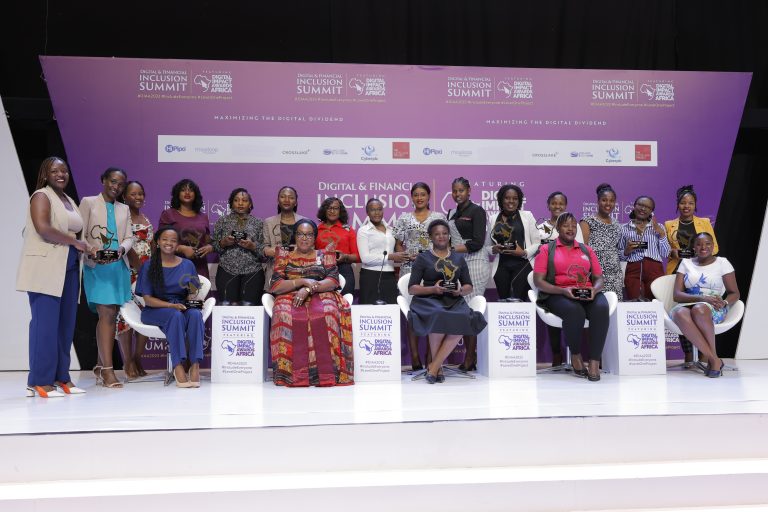
The overall winners as scored by the jury were Kanzu Code Ladies and walked home with USD 2,000 to be used to put their product on the market. They developed an online bank to ease access to finance for local women. The other 4 teams that made the top five will together share USD 2,000.

Meanwhile, HiPipo CEO – Innocent Kawooya applauded all participating teams as “all winners” and promised that there was a plan to create an innovation hub for all of them to ensure that their ideas are actualized and their products go to market.

At the summit, the HiPipo patron, Eng. David Karubanga – who is also the State Minister for Public Service and Member of Parliament for Kigorobya County applauded the organizers for thinking about Women as the world grapples to reduce the dominance of men in all sectors. He also promised government support in fulfilling this dream of enhancing women financial inclusion.

FACTFILE:

  • Globally, women entrepreneurs are 30% less likely to have access to sufficient funding for their businesses.
  • However, Women entrepreneurs continue to receive only a small fraction of the total capital available for SME investment across Africa generally and Uganda specifically.
  • In Uganda, bank lending is dominated by the corporate sector and typically excludes lending to those employed outside of the formal sector, or to small and micro businesses, areas in which women are more likely to be employed.
  • In 2018, Bank of Uganda reported in that informal cross border trade stood at USD595million and Uganda registered a trade surplus.
  • In 2015, a McKinsey and Company study indicated that companies that had a balanced and inclusive workforce were 33% more likely to have better than average profits.
  • A Boston Consulting Group study indicated that companies with a balanced and inclusive senior management teams had 19% higher revenues due to innovation

“People not only buy your product but buy into you. Be smart because you are the business yourself,” Doreen Lukandwa told Young Developers.

For Immediate Release.

17th, September, 2020 – Doreen Lukandwa; the Head of Marketing and Customer Success at Beyonic Uganda has urged start-ups to pay special attention to both customers’ acquisition and retention as these two are core pillars of business success.

While delivering the final mentorship session at the just concluded Women in FinTech Hackathon held in Kampala, Doreen Lukandwa took the participants through the 7Ps of the market mix, that is to say; Product, Place, Price, Promotion, Physical Evidence, People, and Processes.

“Marketing is not something that you just pick from the back of your pocket and say that I need a marketing person. You can actually do the marketing yourself. Every day you talk about your business, you are marketing it. You must understand your customer. When you know who you want to speak to then you know how you are going to get your money back through pricing,” Doreen Lukandwa said, adding;

“People not only buy your product but they buy into you. Look smart; don’t take that for granted because you are the business yourself.”

Organized by HiPipo under its Include EveryOne program in partnership with Crosslake Tech, ModusBox, Mojaloop Foundation and Level One Project, this women focused hackathon has participants conceptualizing and developing different financial inclusion products with special focus on women in areas such as payments, lending, saving, e-commerce, e-education and e-agriculture among others. 

Day 5 was the final day of this week long Women in FinTech Hackathon. Teams pitched their products to the jury and now waiting for the final scores. The team with the best product will be announced tomorrow, Friday 18th September at the Women in FinTech summit at Sheraton Hotel.

Ends.

There is no ‘perfect product’. Go to Market but continue improving your product – Primera Muthoni tells Young Developers.

For Immediate Release.

16th, September, 2020 – Primera Muthoni; a Products Specialist at MTN Uganda, Leading Innovator and Entrepreneur has today challenged young developers to always ensure that they execute a proper product roll-out plan because ‘Going to Market’ is as important as Product Development.

Primera Muthoni said this while delivering a mentorship session around Technology and Product Go to Market at the 4th day of the Women in FinTech Hackathon that is currently underway in Kampala, Uganda.

With over 10 years’ experience in Telecoms’ products develop and marketing, she shared special insights on when to roll-out a product, how to handle the first launch days and what happens thereafter with focus on the fact that there is no perfect product, and thus all products require upgrades from time to time.

“Not yet good enough to go to market? This is the story today. I have had my App in the market for six years. The day we went to market, it had like two, three features but we went to the market. We have been adding more features and functions all this time,” Primera Muthoni said.

She added: “I have SMSs that clock in my phone every hour. I have emails every single morning showing me statistics of the last seven days plus all sorts of notifications. This is because if there’s a problem with my product, I want to be the first person to see and know it. I am the owner of that product. I do not want the tech team telling me. I don’t want the developer telling me. I don’t want that stuff. I want to know and keep updated because I know that I can never create a product that is problem free completely.”

Organized by HiPipo under its Include EveryOne program in partnership with Crosslake Tech, ModusBox, Mojaloop Foundation and Level One Project, this women focused hackathon has participants conceptualizing and developing different financial inclusion products with special focus on women in areas such as payments, lending, saving, e-commerce, e-education and e-agriculture among others. 

Minus the mentorship session, the fourth day of the Women in FinTech Hackathon had teams get introduced to the Level One Principle of Level 1 Principle of Scheme Design & Governance, tackled MVP (minimum viable product) details, and forex cross country use case. The hackathon will culminate in to the Women in FinTech summit on Friday 18th September.

Important Dates.

  1. 12 September: Women in FinTech hackathon kicks off.
  2. 14th to 17th September: Women in FinTech hackathon underway.
  3. 18th September: Women in Fintech summit.  

Ends.