Home Blog Page 4

“Evening Hymn” Quietly Achieves What Most Modern Music No Longer Even Attempts — Inner Peace

In an era dominated by overstimulation, emotional urgency, and endless digital noise, Evening Hymn emerges as something increasingly rare in modern music culture:

Stillness.

Not emptiness.

Not silence.

But intentional emotional calm crafted with extraordinary precision.

As the third major spiritual moment on Voices Of Light – African Hymns Reimagined Vol. 1, the song shifts the project into a far more reflective emotional space, demonstrating the album’s remarkable understanding of human emotional rhythm across the day itself.

Where earlier records like Matchless Love and All Glory introduced warmth, celebration, and collective praise, Evening Hymn slows the heartbeat of the listener and gently guides the spirit toward rest.

That emotional transition is one of the album’s greatest artistic achievements.

From its opening lines:

“Come let us sing this evening song
As day is fading away…”

the listener is immediately placed inside an atmosphere of emotional release. The songwriting does not chase complexity. Instead, it pursues emotional sincerity with near-liturgical elegance.

The brilliance of the composition lies in its universality.

Regardless of geography, culture, or background, nearly everyone understands the emotional feeling of evening:
the slowing of the world,
the reflection on the day,
the longing for peace,
the search for comfort before rest.

Evening Hymn transforms that shared human experience into music that feels both deeply spiritual and profoundly therapeutic.

The recurring refrain:

“Oh oh oh — we rest in You…”

is especially masterful in its emotional construction. Rather than functioning as a conventional chorus alone, it operates almost like guided spiritual breathing. The melodic repetition creates a calming psychological effect that naturally encourages emotional surrender and mental stillness.

This is music designed not merely for listening, but for decompression.

Vocally, Doreen Nanfuka delivers perhaps one of the most emotionally delicate performances on the entire album. Her voice feels intentionally softened, almost floating above the arrangement rather than sitting aggressively within it.

There is extraordinary emotional maturity in the restraint of her delivery.

She never forces emotion.

She allows it to unfold naturally.

That subtlety becomes the emotional core of the record.

Supporting her is the beautifully controlled presence of Enlightened Academy Choir, whose harmonies are handled with remarkable sophistication throughout the arrangement. Instead of overpowering the listener, the choir acts almost like emotional atmosphere itself — surrounding the song with warmth, reassurance, and spiritual intimacy.

Together with HiPipo Voices, they create what feels less like a performance and more like an environment.

The production work by George Kasakya and Henry Kiwuuwa deserves exceptional recognition here for its emotional intelligence.

The song is incredibly spacious.

Every pause matters.

Every vocal reverb feels intentional.

Every ambient layer appears carefully calibrated to create psychological softness.

This level of emotional engineering is extremely difficult to achieve without losing listener engagement, yet Evening Hymn manages it with remarkable confidence.

The arrangement understands something many contemporary productions overlook:
peace itself can be emotionally powerful.

In many ways, the record perfectly embodies one of the central ambitions outlined during the launch of Voices Of Light – African Hymns Reimagined Vol. 1, creating music that integrates naturally into daily life and emotional routine rather than existing as occasional listening.

Evening Hymn feels intentionally designed for:
night reflection,
family prayer moments,
late-night solitude,
healing spaces,
quiet drives,
meditation playlists,
and emotional recovery after difficult days.

That level of functional emotional design gives the song enormous long-term streaming potential because it becomes attached not merely to listening habits, but to human routines themselves.

Speaking about the vision behind the record, Innocent Kawooya describes the song as one of the emotional anchors of the album:

“We wanted Evening Hymn to feel like peace entering the room. Modern life has become extremely loud emotionally, mentally, spiritually. This song was intentionally created to give people a moment of calm at the end of the day, something they could genuinely live with every evening.”

Lead vocalist Doreen Nanfuka says the emotional atmosphere during recording was deeply personal:

“This song felt healing even while recording it. There was no pressure to perform loudly or dramatically. The emotion came from softness, honesty, and surrender. We wanted listeners to feel safe inside the music.”

The production crew, including George Kasakya and Henry Kiwuuwa, revealed that much of the sonic direction focused on emotional breathing space:

“We intentionally avoided overcrowding the arrangement. The silence between moments was just as important as the music itself. Evening Hymn needed to feel like rest, not stimulation.”

Perhaps the most extraordinary thing about Evening Hymn is its refusal to compete for attention.

Instead, it invites presence.

And in today’s attention economy, that may be one of the boldest artistic decisions possible.

The song does not demand emotional exhaustion from the listener.

It offers restoration.

Not many modern records understand the value of that.

Evening Hymn does.

And because of that, it quietly stands as one of the most emotionally sophisticated pieces on Voices Of Light – African Hymns Reimagined Vol. 1, a modern spiritual lullaby designed for a restless world searching for peace again.

As you experience the powerful journey of Voices Of Light – African Hymns Reimagined Vol. 1, from songs of hope, praise, healing, unity, victory, and light, this album stands as a remarkable celebration of faith, humanity, and emotional transformation through music. Led by Doreen Nanfuka, Enlightened Academy Choir, and HiPipo Voices, with exceptional production led by Innocent Kawooya, alongside George Kasakya and Henry Kiwuuwa, the project continues to position itself as one of the most emotionally immersive and globally resonant inspirational music releases from Africa in recent years.

Experience the full album globally here: Voices Of Light – African Hymns Reimagined Vol. 1: https://ditto.fm/voices-of-light-voices-of-light

And as the movement continues, secure your place at the prestigious HiPipo Music Awards 2026 and celebrate the future of African music, creativity, and cultural excellence: Buy HiPipo Music Awards Tickets: https://momoticketing.com/event/hipipo-music-awards-2
THE DIGITAL TAXMAN – How Governments Across Africa Are Rebuilding Revenue Systems Through Digital Payments

By HiPipo Money

For decades, one of the biggest challenges facing many African governments was not simply collecting revenue.

It was tracking it.

Cash-based systems created enormous inefficiencies across public finance. Tax payments could disappear between offices. Manual processes delayed reconciliation. Citizens spent hours in queues to pay licences, permits, and service fees. Corruption opportunities thrived inside fragmented collection systems. Businesses faced uncertainty. Governments struggled with leakages. And public trust weakened when payment systems appeared opaque, inconsistent, or difficult to navigate.

In many cases, the state itself operated slowly because money moved slowly.

Today, that reality is beginning to change.

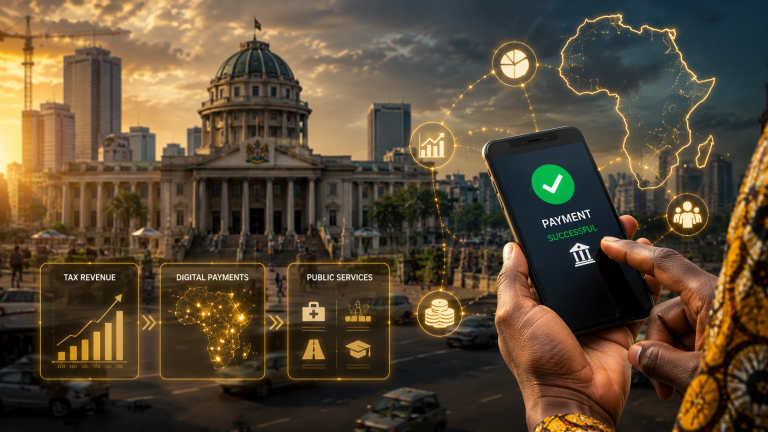
Across Africa, governments are rapidly digitising payments for taxes, licences, utility bills, permits, customs duties, school fees, healthcare services, and public administration charges. Mobile money, digital banking, payment gateways, QR systems, national payment switches, and interoperable digital platforms are increasingly replacing manual cash-based collection systems.

The transformation is not only technological. It is fiscal. Institutional. Political. And deeply economic.

Because when governments modernise payment systems, they do more than collect money faster.

They begin rebuilding the relationship between citizens, businesses, and the state itself.

Historically, public payment systems across many African countries relied heavily on manual processes.

Citizens often needed to:

  • travel physically to government offices,
  • carry cash,
  • fill out paperwork manually,
  • wait in long queues,
  • and navigate fragmented approval structures.

For businesses, compliance frequently became expensive not only financially, but operationally. A company could lose entire working days processing tax obligations, licence renewals, customs documentation, or regulatory payments.

These inefficiencies created hidden economic costs.

Time lost.
Productivity reduced.
Leakages increased.
Compliance discouraged.

And where manual cash handling dominates, opportunities for informal deductions and corruption often expand.

This is one reason government payment digitalisation has become such a major policy priority across the continent.

Digital systems reduce friction.

And reduced friction improves both compliance and transparency.

At the center of this transformation lies a simple but powerful idea:

When payments become traceable digitally, governance changes.

A digital tax payment creates an audit trail.
A digital licence fee generates real-time records.
A digital customs payment improves visibility.
A digital utility payment reduces cash leakage.
A digital government transfer strengthens accountability.

The transaction itself becomes verifiable data.

This is one of the deepest structural impacts of digital government payments.

Cash systems often obscure visibility.

Digital systems increase visibility.

And visibility changes institutions.

Revenue authorities across Africa are increasingly leveraging digital infrastructure to improve collection efficiency. Tax systems are being integrated with:

  • mobile money,
  • banking systems,
  • payment gateways,
  • online portals,
  • digital identities,
  • and real-time reconciliation tools.

This allows governments to:

  • automate collections,
  • reduce manual intervention,
  • improve compliance tracking,
  • strengthen reporting,
  • and expand revenue bases more efficiently.

The effects can be substantial.

When payment systems become easier and more transparent, compliance often improves. Citizens and businesses are more likely to pay when systems are:

  • convenient,
  • predictable,
  • accessible,
  • and trusted.

This is especially important for SMEs and informal businesses.

Historically, many small businesses avoided formal systems partly because compliance processes themselves were too burdensome. Digital payments simplify onboarding into formal economic participation.

A business owner can:

  • pay taxes remotely,
  • renew licences digitally,
  • verify receipts instantly,
  • and reduce costly administrative delays.

This lowers the operational cost of formalisation.

Mobile money has played a particularly important role in this transformation.

Across Africa, telecom-led financial infrastructure often reached citizens faster than traditional banking systems. Governments increasingly recognized that if mobile wallets already handled millions of daily transactions, they could also support:

  • tax payments,
  • utility collections,
  • permit fees,
  • school payments,
  • transport levies,
  • and broader public service transactions.

This dramatically expanded government payment reach.

Citizens no longer needed to rely exclusively on urban offices or bank branches to interact financially with the state.

The implications for inclusion are significant.

A rural trader can renew a licence digitally.
A farmer can pay fees remotely.
A student can pay school charges through mobile channels.
A business can settle obligations without travelling physically.

Digitalisation therefore reduces not only financial friction, but geographic friction too.

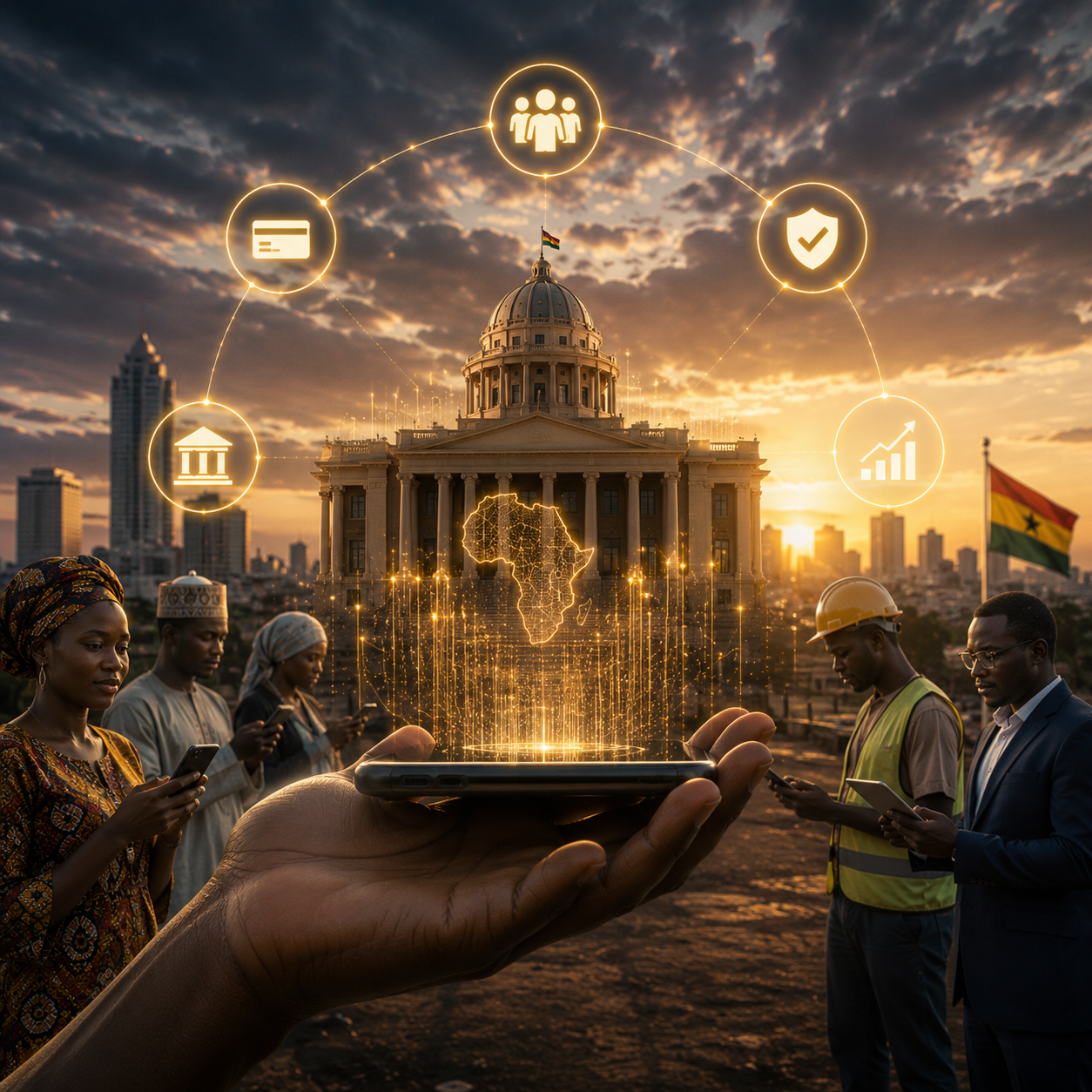
Governments are also increasingly connecting payment digitalisation to broader national digital transformation agendas.

Payment systems now intersect directly with:

  • digital identity programs,
  • e-government services,
  • customs modernisation,
  • smart cities,
  • procurement systems,
  • and social protection infrastructure.

This creates what many policymakers increasingly describe as digital public infrastructure.

The idea is simple but transformative:

Identity.
Payments.
Data systems.
Public services.

All connected.

When these systems work together effectively, governments gain stronger administrative capacity and citizens experience more seamless service delivery.

Yet despite the benefits, digitalisation also introduces difficult challenges.

One of the biggest is exclusion risk.

Not all citizens access digital systems equally.

Rural communities may face:

  • weak connectivity,
  • unreliable electricity,
  • low digital literacy,
  • and limited smartphone access.

Older populations may struggle with digital interfaces.
Low-income citizens may remain dependent on cash.
Women may face device access barriers.
People with disabilities may encounter inaccessible systems.

A fully digital government system that ignores these realities risks creating new forms of exclusion.

This is why hybrid approaches remain important.

Digital transformation must increase access, not reduce it.

Governments therefore need:

  • strong agent networks,
  • offline-compatible systems,
  • multilingual support,
  • consumer education,
  • and accessible user experiences.

The goal should not simply be digitisation.

The goal should be inclusive digitisation.

Cybersecurity is another major concern.

As government revenue systems become increasingly digital, they also become more attractive targets for:

  • fraud,
  • phishing,
  • cyberattacks,
  • identity theft,
  • and system manipulation.

Trust becomes critical.

Citizens must believe:

  • payments are secure,
  • receipts are legitimate,
  • data is protected,
  • and systems are reliable.

Without trust, users may revert to informal or cash-based alternatives.

This means payment modernization must be accompanied by:

  • strong cybersecurity frameworks,
  • transparent governance,
  • dispute resolution systems,
  • and effective regulatory oversight.

There is another deeper consequence of digital government payments:

They change the visibility of the economy itself.

Digital transactions generate data.
Data improves economic mapping.
Economic mapping improves policy planning.

Governments gain better understanding of:

  • business activity,
  • sector participation,
  • regional trends,
  • revenue flows,
  • and service demand patterns.

This can strengthen:

  • fiscal planning,
  • infrastructure investment,
  • public service targeting,
  • and economic policy design.

In this sense, payment digitalisation becomes state capacity infrastructure.

The long-term implications for transparency are especially important.

One of the strongest arguments for government payment digitalisation is its ability to reduce leakage and corruption opportunities associated with cash-heavy systems. Automated reconciliation, digital records, transaction visibility, and reduced manual handling all improve accountability.

But technology alone is not enough.

Digital systems can improve transparency, if governance remains strong.

Without institutional integrity, even digital systems can be manipulated through procurement abuse, opaque contracts, weak oversight, or exclusionary practices.

Technology, therefore, amplifies governance quality rather than replacing it.

For HiPipo Money, this transformation reflects one of the most important realities of Africa’s digital future:

Financial infrastructure is governance infrastructure.

The modernisation of public payments affects:

  • business competitiveness,
  • citizen trust,
  • SME growth,
  • public accountability,
  • and national development capacity.

This aligns strongly with broader ecosystem conversations around digital transformation, inclusion, financial literacy, interoperability, and public-private collaboration championed through initiatives such as the Digital Impact Awards Africa (DIAA), Include Everyone, and wider innovation ecosystems across the continent.

Because ultimately, government payment digitalisation is not only about making it easier to pay taxes.

It is about building more efficient states.

A business spending less time in queues.
A citizen receiving transparent receipts.
A rural entrepreneur accessing government services remotely.
A government reducing leakages.
A country improving revenue collection fairly.
A public system becoming more accountable.

Most citizens may never think deeply about the infrastructure behind a digital licence payment or online tax receipt.

But these systems quietly shape how economies function.

And across Africa, the shift from cash-heavy government systems to digital public payments may become one of the most important institutional transformations of the digital age.

Because in the end, modern economies are not only built by collecting revenue.

They are built by collecting trust.

‘No More Sleep, No More Corruption’: President Museveni Warns Non-Performers as He Unveils Economic Gains

0

President Yoweri K. Museveni delivered a characteristically firm State of the Nation address on Thursday, painting a picture of steady economic progress while issuing sharp warnings to absentee leaders, corrupt officials, and underperforming public servants.

Speaking before a limited audience at Kololo Ceremonial Grounds due to Ebola safety restrictions, the President declared that the coming term would be one of “no more sleep, no more corruption, and no more politeness” in dealing with lax leadership.

“All non-performers should leave positions of leadership,” Museveni said, drawing a clear line on accountability.

The President reported significant improvements in household livelihoods, saying poverty levels had fallen from 56 percent to 16.1 percent. He projected that Uganda’s economy would grow from 6.4 percent to 10 percent by 2027, driven by key investments and the anticipated commencement of oil production.

Museveni said the NRM government had identified all the key requirements needed to build a prosperous Uganda, and that the mission now was to support companies that align with the development agenda and are committed to wealth creation.

The President devoted considerable attention to agriculture, explaining why he has consistently emphasised the sector.

“I have spent a lot of time emphasising agriculture, not because I do not value other sectors, but because it is where our people can earn a living more easily,” Museveni said.

He showcased video testimonies highlighting individuals who have benefited from government wealth creation programmes introduced over the years, underscoring their impact on livelihoods and economic empowerment.

Museveni also touted the benefits of the East African Crude Oil Pipeline, saying fuel tankers would eventually be phased off the roads once the pipeline and related petroleum infrastructure are completed.

“Petrol will be transported through pipelines instead of competing with vehicles on the roads, leaving the roads for cars and light cargo,” the President said.

In one of the more striking passages of his address, Museveni expressed frustration with leaders who request allowances to engage with citizens at the grassroots while remaining disconnected from the people they represent.

He criticised some leaders for failing to visit their constituencies, alleging that they instead remain in Kampala. The President warned that anyone who does not care about the people should not attempt to assume leadership roles.

“Don’t try to be a leader when you don’t care about the people,” Museveni said.

The President announced that government would table 38 bills before Parliament, outlining an ambitious legislative agenda aimed at advancing national development and policy reforms. Specific details of the proposed bills were not provided during the address.

Speaker of Parliament Jacob Marksons Oboth echoed Museveni’s “no more sleep” message, urging Members of Parliament to adopt a more vigilant and proactive approach in their legislative and oversight duties. He called on MPs to become a “Parliament of no more sleep,” emphasising heightened responsibility and responsiveness in serving the public.

Oboth also announced that President Museveni would deliver the 2026/27 national budget speech on Thursday, 11th June 2026, at Kololo Independence Grounds, beginning at 2:00 pm.

Attendance at the event was limited to Members of Parliament, parliamentary staff, and a select group of invited guests, in line with measures put in place to prevent the spread of Ebola. The President thanked voters for what he described as overwhelming support for the National Resistance Movement in the 2026 elections.

In his 2025 State of the Nation address, Museveni had reported that Uganda’s economy had grown from $3.9 billion in 1986 to $61 billion, with growth estimated at 6.7 percent. He had highlighted progress in industrialisation, infrastructure, and health investment, including a 250-bed cardiac hospital, while stressing the need to move away from exporting raw materials.

This year’s address built on those themes while striking a tougher tone on governance and performance.

THE INVISIBLE CHECKOUT BUTTON – How Digital Payment Gateways Are Powering Africa’s SME Economy, and Connecting Local Businesses to the Global Marketplace

By HiPipo Money

For decades, one of the biggest barriers facing African businesses was not the quality of products.

It was getting paid.

A fashion designer in Lagos could attract international customers online but struggle to receive payments efficiently. A Ugandan entrepreneur could launch an e-commerce store yet face difficulty integrating reliable payment systems. A small business owner could advertise products across social media but lose customers during checkout because payment processes were slow, fragmented, or unsupported.

In many ways, Africa’s digital commerce problem was never only about internet access.

It was about transaction infrastructure.

Because no matter how innovative a business becomes, commerce eventually reaches the same critical moment:

The payment.

And increasingly, digital payment gateways are becoming the invisible infrastructure powering Africa’s modern SME economy.

Across the continent, payment processors such as Paystack, Flutterwave, DPO Group, Pesapal, Paymob, Chipper Cash, and others are transforming how businesses accept, process, manage, and reconcile digital payments. They are helping merchants move beyond cash, connect to global platforms, integrate mobile money and card systems, automate commerce, and participate more fully in the expanding digital economy.

The shift is profound.

Because for many African SMEs, digital payment gateways are not merely financial tools.

They are growth infrastructure.

Historically, online commerce in many African markets faced structural payment barriers.

Traditional banking systems often lacked flexible APIs, merchant onboarding could be slow, card penetration remained uneven, cross-border transactions were difficult, and many global payment systems offered limited support for African businesses.

The result was friction.

And friction kills commerce.

A customer ready to buy may abandon a transaction if checkout feels complicated or unreliable. Small businesses lost trust, sales opportunities, and growth potential because payment infrastructure could not support modern digital commerce effectively.

Payment gateways emerged to solve this problem.

They simplified integration between merchants, consumers, banks, mobile money systems, and global payment networks. Instead of building payment systems independently, businesses could connect through centralized processors capable of handling:

  • online checkout,
  • card processing,
  • mobile money integration,
  • bank transfers,
  • recurring billing,
  • transaction verification,
  • fraud monitoring,
  • reconciliation,
  • and API connectivity.

This dramatically lowered barriers to digital entrepreneurship.

Suddenly, SMEs could launch online stores, accept payments digitally, and participate in e-commerce ecosystems without building financial infrastructure themselves.

That change unlocked enormous economic potential.

One of the strongest examples of this transformation is Paystack.

Founded in Nigeria, Paystack grew rapidly by simplifying online payments for businesses and developers. Its infrastructure helped merchants integrate payments more easily into websites, applications, and digital commerce platforms. Over time, the company became one of the most influential payment infrastructure providers in Africa’s FinTech ecosystem.

According to reporting frequently referenced across the industry, Paystack processes more than half of Nigeria’s online transactions.

That scale reflects something much larger than startup success.

It reflects the rise of digital commerce infrastructure built for African realities.

Paystack’s significance also demonstrated another important truth:

Africa’s FinTech future would increasingly be built through APIs and infrastructure layers rather than only consumer-facing apps.

The most valuable companies were no longer simply creating wallets.

They were enabling ecosystems.

Digital payment gateways play an especially important role for SMEs because they reduce operational complexity.

Small businesses already face multiple pressures:

  • inventory management,
  • customer acquisition,
  • logistics,
  • taxation,
  • cash flow,
  • marketing,
  • and competition.

Managing fragmented payment systems manually adds further strain.

Integrated payment processors simplify this environment by centralizing transactions and automating large parts of commerce operations. Businesses gain:

  • faster settlement,
  • transaction visibility,
  • digital records,
  • automated reconciliation,
  • customer payment flexibility,
  • and scalable payment infrastructure.

For SMEs operating on thin margins, this efficiency matters enormously.

A business that accepts multiple payment methods seamlessly can reach more customers.
A merchant receiving faster settlement improves liquidity.
A company with digital transaction history becomes more visible to lenders and investors.

Payments therefore become more than transactional infrastructure.

They become business intelligence infrastructure.

Another major impact of digital gateways is cross-border connectivity.

Africa’s digital entrepreneurs increasingly operate inside global markets. A creator in Nairobi may sell services internationally. A fashion business in Kampala may market products globally through Instagram or TikTok. A software developer in Lagos may serve overseas clients remotely.

Yet historically, receiving international payments remained one of the continent’s biggest business frustrations.

Many global payment systems offered limited African support.
Settlement delays were common.
Currency conversion costs remained high.
Platform restrictions affected onboarding.

Digital payment gateways helped bridge these gaps by integrating local businesses with international commerce systems more effectively.

This matters because the future African economy is becoming increasingly borderless.

SMEs are no longer competing only locally.

They are participating globally.

And global participation requires payment infrastructure capable of supporting international trust, reliability, and interoperability.

Mobile money integration has also been transformative.

Africa’s payment environment differs from many developed economies because mobile wallets often play a far larger role than traditional cards or bank accounts. Payment gateways capable of integrating mobile money therefore gained major advantages.

This integration created a uniquely African digital commerce model:

  • cards,
  • wallets,
  • bank transfers,
  • QR systems,
  • and telecom-led financial services
    operating together inside broader digital payment ecosystems.

The result is one of the world’s most innovative payment landscapes.

Yet despite rapid growth, major challenges remain.

One of the biggest is cost.

SMEs are highly sensitive to transaction fees, settlement charges, foreign exchange spreads, and platform commissions. Small businesses processing low-value transactions may lose meaningful portions of revenue if payment costs remain too high.

Trust is another challenge.

Online fraud, failed payments, chargebacks, phishing attacks, and scam merchants continue affecting confidence in digital commerce. Consumers must trust payment systems before adoption scales sustainably.

Infrastructure gaps also remain significant.

Rural merchants may still face:

  • unreliable internet,
  • inconsistent electricity,
  • low smartphone penetration,
  • and limited access to integrated commerce tools.

If digital commerce infrastructure remains concentrated in urban ecosystems, broader inclusion goals may weaken.

Interoperability is equally important.

Businesses increasingly need payment systems capable of working across:

  • banks,
  • mobile money providers,
  • FinTech platforms,
  • regional markets,
  • and international networks.

Fragmented systems increase friction and reduce scalability.

This is why many regulators and ecosystem players are increasingly focusing on open APIs, real-time payment systems, interoperable switches, and broader digital public infrastructure modernisation.

There is another deeper transformation happening beneath the surface.

Digital payment gateways are changing how businesses become visible.

Historically, informal SMEs often lacked transaction histories or verifiable financial records. Digital payments generate structured economic data. Over time, this data can support:

  • lending,
  • investment readiness,
  • credit scoring,
  • taxation efficiency,
  • inventory financing,
  • and business formalisation.

The payment gateway therefore, becomes not only a checkout tool, but a bridge into the formal economy.

This is especially important for:

  • youth entrepreneurs,
  • women-led businesses,
  • creators,
  • freelancers,
  • informal merchants,
  • and cross-border SMEs.

Many of these businesses were historically underserved by traditional finance despite significant economic activity.

Digital commerce infrastructure is beginning to change that equation.

For HiPipo Money, this evolution represents one of the most important shifts in Africa’s digital economy:

The rise of infrastructure-driven entrepreneurship.

Africa’s future billion-dollar companies may increasingly be those quietly enabling millions of smaller businesses to transact, scale, and participate digitally.

This aligns strongly with the broader missions behind initiatives such as the Digital Impact Awards Africa (DIAA), Include Everyone, Women in FinTech, and wider digital entrepreneurship ecosystems championing innovation, interoperability, inclusion, and SME growth across the continent.

Because ultimately, payment gateways are not only technology platforms.

They are economic bridges.

A small merchant reaching customers globally.
A creator receiving payments instantly.
A startup launching without building financial infrastructure from scratch.
A woman entrepreneur selling online confidently.
A freelancer entering international markets.
An SME becoming visible to formal finance for the first time.

Most consumers may never think deeply about what happens after clicking “Pay Now.”

But behind that invisible checkout button sits one of the most important infrastructure revolutions shaping Africa’s digital future.

And increasingly, the businesses controlling the rails of digital commerce may help define the next chapter of Africa’s economic transformation.

MTN Mobile Money Uganda Appoints Phrase Lubega as New Managing Director

MTN Mobile Money (U) Limited has appointed Phrase Lubega as its new Managing Director, subject to approval by the Bank of Uganda, the company announced on 4th June 2026.

Lubega, a Ugandan national with over three decades of experience spanning telecommunications, information technology, and financial services, returns to Uganda after serving as Interim Managing Director of MoMo Payment Service Bank in Nigeria. In that role, he was responsible for shaping the bank’s long-term strategy and digital banking model, achieving strong revenue growth and successfully launching new products.

The appointment reinforces MTN Mobile Money’s commitment to accelerating financial inclusion and digital innovation across Uganda, according to a statement from the company’s Board of Directors.

Lubega is no stranger to MTN Uganda. He previously served as General Manager for Mobile Financial Services, where he successfully led the launch of innovative products such as MoKash and drove strong revenue growth in a competitive and regulated environment. He also served as Chief Information Officer of MTN Uganda, spearheading the transformation of IT systems that enabled the growth of mobile money services.

His career within the wider MTN Group includes senior leadership roles such as Group Executive for Fintech Commercial Operations and General Manager for Commercial and Go-To-Market. In those positions, he played a critical role in driving mobile financial services growth across the Group’s footprint, contributing to customer growth, improved retention, and expansion of mobile money operations across multiple countries.

Beyond his executive roles, Lubega has extensive governance experience, serving on multiple boards across MTN’s Mobile Money operations in Africa, including as a non-executive director in Benin, Congo Brazzaville, and Guinea Conakry.

Serigne Dioum, Group Chief Executive Officer of MTN Group Fintech, welcomed the appointment.

“We are delighted to appoint Phrase Lubega as Managing Director of MTN Mobile Money (U) Limited,” Dioum said. “Phrase brings deep market expertise, strong execution capability and a proven track record of scaling mobile financial services across diverse markets. His leadership will be instrumental as we strengthen our position in Uganda and continue to expand access to inclusive, secure and innovative digital financial solutions that empower individuals and businesses.”

Sylvia Mulinge, Chairperson of the Board of Directors of MTN Mobile Money (U) Limited, also expressed confidence in the new appointee.

“On behalf of the Board, we are pleased to appoint Phrase Lubega to lead MTN Mobile Money Uganda into its next phase of growth,” Mulinge said. “His deep understanding of the business, strong governance experience and proven leadership across the MTN footprint position him well to drive sustainable value for all stakeholders.”

Commenting on his appointment, Lubega said he was honoured to lead the company at an exciting time in the evolution of digital financial services.

“I look forward to working with the talented team and our stakeholders to expand access to financial solutions, enhance customer experience, and continue driving the growth of Uganda’s digital economy,” he said.

Lubega holds a Master of Business Administration (MBA) from York University in the United Kingdom, an Executive MBA from the Quantic School of Business and Technology in the United States, and a Bachelor of Science in Physics from Makerere University.

The Board also extended sincere appreciation to Sarah Bateta Okwi, who served as Acting Managing Director over the past several months.

“Her dedication and commitment have ensured continuity, stability and sustained momentum for MTN Mobile Money Uganda during the transition period,” the statement read.

MTN Mobile Money is one of Uganda’s leading digital financial service providers, offering a range of services including person-to-person transfers, bill payments, savings, loans, and merchant payments. The appointment of a seasoned fintech executive like Lubega signals the company’s intent to deepen its product offerings and expand financial inclusion, particularly as competition in Uganda’s mobile money space intensifies.

The appointment remains subject to approval by the Bank of Uganda, the industry regulator. Once confirmed, Lubega will take over full leadership of the company’s operations in the country.

The Elderly Man Who No Longer Fears the Nightfall

0

A #100DaysofSolar Human Impact Story from Kamengo, Mpigi District, Uganda

For Kigozi Alifonce, darkness once made pain feel even heavier.

At 82 years old and living alone in Kamengo, Mpigi District, every evening became a struggle against fear, weakness, and physical suffering. Age had already slowed his body, but once the sun disappeared, simple movement inside his home became dangerous and exhausting.

Each step through the darkness strained his aching legs.

His chest pains worsened with anxiety and isolation.

And with medicine often difficult to access, the nights felt painfully long and unforgiving.

For Alifonce, darkness was no longer just absence of light.

It deepened suffering itself.

Fear entered the house with every sunset, and the loneliness of facing those difficult nights alone slowly wore down his sense of peace and dignity.

Then Solar M7 arrived. And for the first time in years, the nights inside his home began to feel manageable again.

Today, reliable solar light fills the house after sunset, helping Alifonce move safely and confidently around his home. The fear of stumbling in darkness has reduced. The emotional stress surrounding nighttime has eased. And inside the quiet of the evening, he now feels something he had almost lost.

Relief.

“Before Solar M7, nights were very painful and frightening for me because moving in darkness was difficult,” Alifonce shared during his interview. “Now I feel safer, calmer, and more comfortable inside my home.”

According to Doreen Nanfuka, elderly people living alone often experience both physical and emotional suffering worsened by poor lighting conditions.

“When older people are struggling with pain or illness, darkness increases fear and vulnerability,” Doreen explained. “Reliable light helps restore safety, confidence, and emotional comfort.”

Innocent Kawooya says stories like Alifonce’s show how energy access directly supports health, dignity, and quality of life for vulnerable elderly people.

“Reliable light helps people live more safely and comfortably regardless of age or physical condition,” he noted. “It restores independence and peace to those who need it most.”

Today, nights inside Alifonce’s home no longer feel like battles against fear and pain.

The darkness no longer controls his movement.

The house feels safe again.

And in a home where suffering once deepened with every sunset, Solar M7 is now helping restore something profoundly human.

Comfort. Relief. And dignity in old age.

Watch the full story of Kigozi Alifonce from Kamengo, Mpigi District, Uganda across our platforms:

YouTube
TikTok
Facebook
Instagram
LinkedIn
X/Twitter

#100DaysofSolar #SolarM7 #IncludeEveryone #EnergyAccess #HumanImpact #Mpigi #Uganda #CleanEnergy #HiPipo