Home Blog Page 37

Driver Tracking APP facilitating EAC Cross Border Trade.

0

Our Reporter.

A mobile application (app) for managing truck drivers’ Covid-19 test information has been credited for curbing the spread of the corona virus and guaranteeing safe trade in the East African Community (EAC).

Launched in September 2020 by the EAC secretariat in partnership with TradeMark East Africa (TMEA) and the European Union, the Regional Electronic Cargo and Drivers’ Tracking (RECDTs) APP has since been downloaded and used by more than 70,000 drivers plying EAC cross-border trade routes.

Speaking at the World Trade Organisation Aid for Trade stocktaking virtual conference held last week, Alban Odhiambo, the TMEA Senior Director Trade Environment noted that the RECDTs APP which is readily available on the Google Play store has two versions; one for drivers and the other for the verification officers at the ports.

“Since we launched the APP in September, 2020, more than 72,900 drivers have downloaded it. This represents more than 90 per cent of the cross border trade drivers in the entire EAC,” Mr Odhiambo said, adding;

“The RECDT APP is currently in English but there are on-going efforts to localize and translate the APP, all its features and training material in to French and other languages. What we have created is a framework which didn’t exist before. As we implement it, it is important that all the partner states support it so that it remains in use for more years to come.”

The RECDTS APP is connected to all border agencies across EAC. When a registered driver takes a COVID-19 test, his/her results are automatically sent to the APP in a QR code format. If a blue QR code is displayed, then the driver is negative, if a black QR code is displayed, then the driver’s results have not been captured and if a red QR code is displayed, then the driver is positive and thus must visit the nearest accredited health centre for immediate management and treatment.

Prior to its roll-out, cross-border truckers were faced with long border queues reaching 80kms at some ports, incurred a lot of costs on multiple COVID-19 tests, accommodation and food as they waited for clearance and stigma from local populations that viewed them as mass corona virus spreaders.

This is however no more after RECDTs introduced mutually recognized COVID-19 certificates, reduced congestion at the borders, eliminated multiple testing and reduced cases of infected drivers.

Caroline Kobusinge, a Health Officer at the Malaba One Stop Border Post noted that with this APP, cross-border truckers are seamlessly cleared because by the time they arrive, their certificates are already in the digital system.

“When a driver arrives, he opens the APP on his phone and displays the QR code to the port health official. The port health official scans the QR code to confirm that the results displayed are authentic and thereafter sends the driver to the immigration official who will also re-scan the same code. If both the health and immigration officials find the results authentic, then the driver is cleared to proceed,” Kobusinge noted. 

Additionally, Dr. Atek Kagirita, the Director Public Health at Ministry of Health noted that Uganda is already scaling up the uptake of RECDTs plus including it in the budgeting process so as to ensure sustainability even after the seed funding gets extinct.

 “It was during this COVID-19 pandemic that we got to know that Trade and Health must always work hand in hand. It is extremely important that essential goods and services continue to move but without endangering lives. The RECDTs APP has helped us achieve this. In the face of a pandemic, we are all vulnerable so we must continue to work together.

As a Trade Technology Intervention, RECDTs is part of TMEA’s wider USD 23 million Safe Trade Emergency Facility (STEF) that was created in 2020 following the outbreak of COVID-19 to support governments to undertake critical measures along the transport and trade routes that will ensure trade continues safely while protecting livelihoods.

Mr Frank Matsaert, the TMEA chief executive officer noted that because COVID-19 is going to be around for quite longer, EAC’s longer term recovery strategies should be strong on the role of digital and technology in enabling trade and protecting livelihoods. 

Strategic tactics and partnerships earning South Sudan economic growth.

0

John Bosco Kalisa.

South Sudan’s integration with East Africa Community (EAC) region will reduce its costs of trade and stimulate economic growth through enhanced participation in regional and global value chains.

Similarly, TradeMark East Africa (TMEA) South Sudan continues supporting the government’s mandate to increase investments and reduce poverty through improving the business environment.

We believe that South Sudan can realise its economic growth by building its strategic partnerships, inspiring political good will from donors and encouraging free movement of goods and people within its country and with its neighbours.

In 2020, we continued supporting the government to strengthen institutional capabilities of Customs by aligning its procedures to those of neighbouring countries; and Standards body, by improving trading standards and sanitary and phytosanitary measures in preparation for future integration with the EAC.

Improving transport infrastructure and service delivery at Nimule Border continues to help seamless flow of humanitarian aid and improve existing and create new trade and work opportunities for border communities.

In the financial year (FY) 2019/20, we focused on completing works at Nimule One Stop Border Post (OSBP) and handed it over on February 6, 2020 to the Government of South Sudan, represented by the the Vice President, H.E Dr. James Wani Igga, and a delegation from Uganda, led by the Minister for Trade, Industry and Cooperatives, Hon. Amelia Kyambadde.

Traders and humanitarian agencies now enjoy faster border processes, less congestion and reduced time and costs to clear goods at Nimule OSBP. Women who form most of the small-scale cross-border traders, have their exports such as shea butter, cleared faster.

Work continued to remove non-tariff barriers (NTBs) along the Nimule-Juba Corridor to quicken truck movement thus reducing transport costs and prices of consumer goods.

Officials were sensitised to detect, report, and jointly resolve any violations to procedures and NTBs along the road. TMEA closely engaged humanitarian partners such as the United Nations, to boost the flow of critical aid into the country.

There are a lot of positive expectations and positive strides for 2021.

The writer is the South Sudan Country Representative for TradeMark East Africa.

Women at the centre of Hariss International’s Quality Assurance.

0

Our Reporter.

A famous Luganda proverb says that ‘Atanayitayita, Yatenda Nyina Okufumba’. This when directly translated in to English means that one who hasn’t travelled, is one who praises their mother as the best cook.

While this proverb opens a debate on whether my mother is a better cook than yours and vice versa, it nonetheless maintains one major fact; mothers/women are the best cooks everywhere you go.

Further, different studies and observations reveal one major truth; women pay more attention to details.

For instance, a 2017 article by Rebecca Shambaugh, the founder of Women in Leadership and Learning (WILL) noted that “Women tend to absorb more information through their senses and store more of it in the brain for other uses than men do. Therefore, women generally have more interest in details and pay more attention to them than men do.”

As such, it is not by mistake that Hariss International Limited; a leading manufacturer of food and beverages such as Riham Biscuits, Riham Water, Riham Soft Drinks, Oner Fruit Juice and Rockboom Energy Drink has women at the heart of its Products Quality Assurance.

For the record, 55 (52%) of its 106 staff in the Quality Assurance department are women who spend each and every day researching and discussing numerous ways of improving the quality system thus providing Quality and Safe products to the consumers.

On Wikipedia, Quality assurance (QA) is defined as “a way of preventing mistakes and defects in manufactured products and avoiding problems when delivering products or services to customers. International Organization for Standardization (ISO) 9000 further defines this as “part of quality management focused on providing confidence that quality requirements will be fulfilled”.

To meet the ever growing product quality expectations from customers, Hariss International practices a principle of “Quality First, Quality Always” with women playing a key role as Quality Managers, Assistants and Supervisors.

This women-centric strategy has not only guaranteed continuous adherence to local and global quality requirements of products but has also over the years seen Hariss International attracting and retaining millions of customers plus receiving several Quality Awards including the Uganda National Bureau of Standards (UNBS) Award for Best Beverage Company.

It goes without saying that even though Hariss International was founded by men; women have played and continue to play a pivotal role in its continuous growth. They have chosen to challenge themselves and their male peers to deliver better quality products and thus elevate Hariss International to higher heights.

About Hariss International Limited.

Hariss International Limited is one of Uganda’s leading manufacturers of food and beverages. Since its inception in 2005, its food and beverages production line has been operating under the brand name RIHAM.

RIHAM has grown into a well-known household brand over the years, and has greatly captured the support of the mass market. The brand currently operates a broad product portfolio comprising of Carbonated Soft Drinks, Natural Mineral Water, Juices, Malt & Energy Drinks, Premium & other biscuits.

Harris International Limited is a decorated Ugandan top tax pay, top people investor and a Buy Uganda, Build Uganda (BUBU) ambassador.  

RIHAM targets non-Sugar consumers with new Oner Apple ‘No Added Sugar’ drink.

0

Our Reporter.

A December 2020 World Health Organisation (WHO) report underlined that non-communicable diseases such as Cardiovascular, Diabetes, Hypertension and Cancers were the leading causes of death in 2019 globally.

As such, non-communicable diseases (NCDs) now make up 7 of the world’s top 10 causes of death, an increase from 4 of the 10 leading causes in 2000.

In Uganda, over 33 per cent of annual deaths by 2014 were attributed to five NCDs; heart diseases, cancers, diabetes, chronic respiratory diseases, and mental health and substance abuse.

Also referred to as Lifestyle diseases, NCDs are largely caused by what we consume. For example, minus genetic susceptibility, the other main causes of diabetes are overweight, high sugar intake and concentration in the body coupled with physical inactivity.

Nonetheless, if we can manage what we consume, exercise regularly and abide to a healthy diet, then we can definitely reduce the burden of NCDs in Uganda and globally.

One way of achieving this is by taking organic foods and juices such as Oner Apple NO ADDED SUGAR drink. 

Manufactured by Hariss International, Oner Apple NO ADDED SUGAR is made from natural apples with no SUGAR added. A 500ml plastic bottle is available in all retail outlets, supermarkets, bars and restaurants countrywide at a recommended retail price of UGX 2,000. 

Oner Apple drink with no Sugar added is tasty, feels natural and is refreshing. It tastes like real apple blended without sugar. I hope Hariss International can keep this up by ensuring that they keep this without sugar additives and extend other ‘no sugar’  flavours to its Oner mango and berry juices,” Becky Nagasha, noted after testing Oner Apple NO ADDED SUGAR for the first time.

Apples contain a high amount of vitamin C also known as ascorbic acid which can help boost the body’s resistance to both infections and damage to body cells.

Like the saying goes, an Apple a day keeps the doctor away. This Apple is now contained in a single 500ml bottle of Oner Apple NO ADDED SUGAR.

About Hariss International Limited.

Hariss International Limited is one of Uganda’s leading manufacturers of food and beverages. Since its inception in 2005, its food and beverages production line has been operating under the brand name RIHAM.

RIHAM has grown into a well-known household brand over the years, and has greatly captured the support of the mass market. The brand currently operates a broad product portfolio comprising of Carbonated Soft Drinks, Natural Mineral Water, Juices, Malt & Energy Drinks, Premium & other biscuits.

Harris International Limited is a Ugandan top tax pay, top people investor and a Buy Uganda, Build Uganda (BUBU) ambassador.  

Meet Dorah Bazirake Owiyo, one of the great women you ought to celebrate on Women’s day

0

With a passion for customer care, it’s no surprise that Dorah Owiyo Chief Operations Officer of Jumia Uganda has managed to take those customer care skills to the next level by using them to encompass even more stakeholders

Who is Dorah Bazirake Owiyo?

“I am the Chief Operations Officer for Jumia Uganda, a role I have been in for the past 3 years.

My job entails a lot, operations starts from the moment a customer places an order all the way up to when delivery is made. My job is to make sure all the stakeholders in between are happy, including the vendors. So for that I work closely with all departments to make sure everything is running smoothly.” she says

Dorah started off building a career in customer care for over 6 years – first in banking where she started as a customer service executive, worked in customer service for over 6 years. She specialized in making customers always cared for and happy.

“ After I left the bank, I decided to pursue one of my other passions – fashion & design. I enjoy all things that involve art & design so I got into making dresses as well as interior design. While I enjoyed being an entrepreneur, I decided to pursue a career with Jumia because I wanted to have a better understanding of the start up industry having just started one myself.” Dorah added.

At Jumia, she started off by doing what she loves – customer experience. As the head of customer experience she was in charge of making sure customers had an all round great experience when shopping on the app, from the shopping experience on the app, down to the prices of products before she worked her way up to her current role – Chief Operations Officer.

Like every job, it has its challenges, you have to be flexible, quick on your feet to make sure things happen effectively & also to guide the teams. But my passion and experience keep me going.

On what it means working as a woman in a role, she says she strives everyday to challenge stereotypes people have about the role.

“E-commerce is one of those industries where your mind and work speaks for itself – we still have to bridge the gap in terms of women challenging themselves more and being more outspokenHowever I am glad that I have been given a place on the table to make changes and be part of the problem solving.

Day in, Dorah works to challenge any stereotypes & boost the confidence of the women that work with her because it is important to make sure they never feel less than or doubt their skills and capabilities.

Career advice for young women

As women we have more expectations put against us, to take care of ourselves, our homes, our careers but we are naturally graced with the skill to multitask so my advice would be to stay focused, know what you want and don’t be afraid to to challenge the status quo.

CMA, UMA sign MOU to increase access to financing from the Capital Markets

0

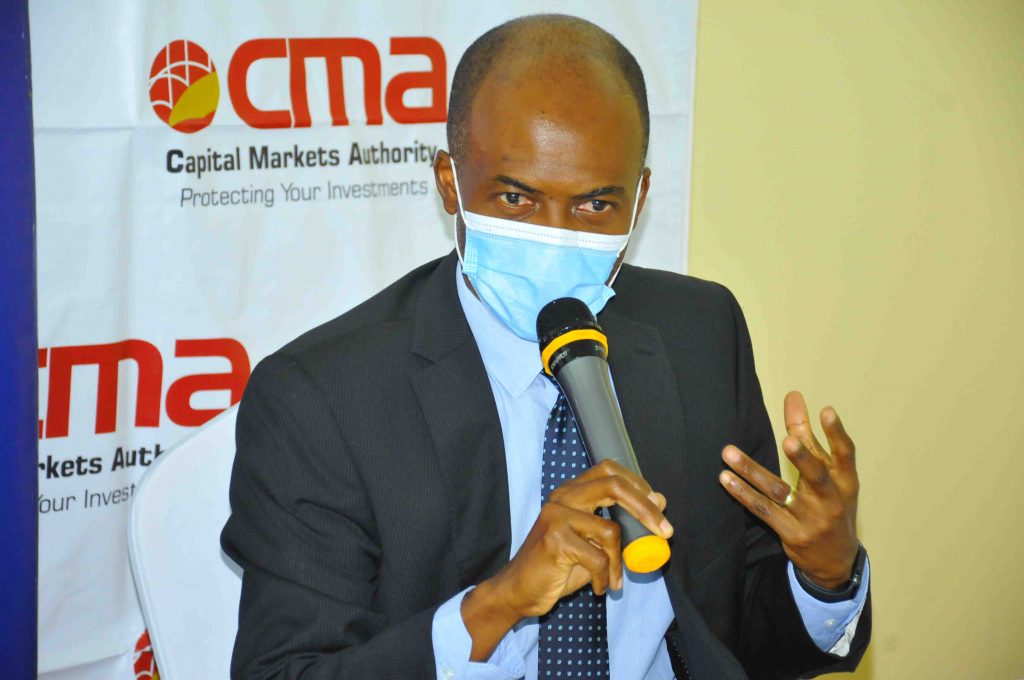
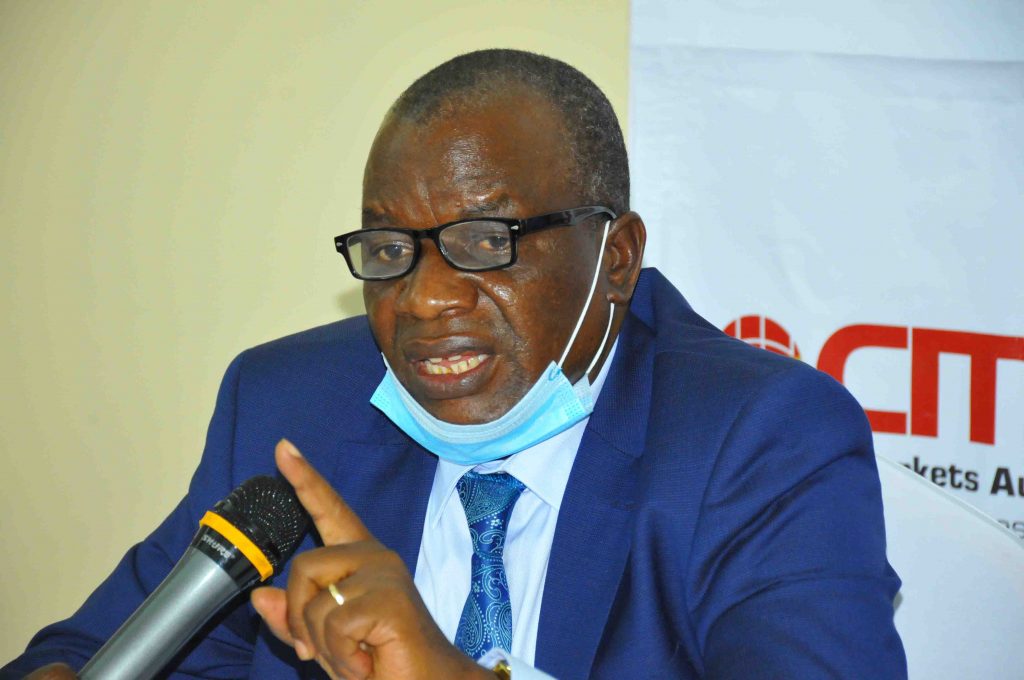
The Capital Markets Authority (CMA) and the Uganda Manufacturers Association (UMA) have signed a Memorandum of Understanding (MOU) that will enable Uganda’s manufacturing sector to take advantage of customized training on the various options for raising long-term capital to bolster their uptake of non-bank, market-based financing that best fits their needs.

Mr. Keith Kalyegira, the CMA Chief Executive Officer said the MOU will enable the CMA and UMA to consult, exchange information, and cooperate closely to expose UMA members to alternative means of meeting their financing needs, by tapping into both private and public markets.  

“Following the signing of this MOU, the CMA looks forward to building the capacity of UMA members to increase access to market-based financing. Non-bank financing can drastically bring down the cost of raising capital which is relatively high and negatively impacts manufacturing. This will hasten Uganda’s socio-economic growth and transformation,” he said.

Mr. Deo Kayemba, the Vice-Chairman, Uganda Manufacturers Association (UMA); said that this partnership will offer industrialists insight into the various financing options available through the Capital Markets.

“The succession of businesses in manufacturing entities in Uganda; both at governance (board) level and shareholding level is largely focused on families with little or no interest to include more members outside their families. This partnership, therefore intends, through collaboration and research, to establish hybrid financing options, as well as identify and influence changes in law that allow for offering financing without requiring significant changes in shareholding structures,” he said.

Mr. Daniel Birungi, the Executive Director, UMA, said that that the collaboration will explore the promotion of market-based financing for manufacturers as a means of reducing the cost of capital that currently negatively impacts manufacturing as a priority sector for Uganda’s socio-economic growth and transformation.

“Manufacturers in the Scholastic materials, the beverages sector among others who have suffered from a slow-down in business due to the guidelines that were instituted by the World Health Organisation to curb the spread of the novel coronavirus. “Therefore, the MoU with CMA is a move towards better Capital Markets solutions for SME financing; a solution that will also catalyze recovery from the crisis occasioned by the pandemic,” Mr. Daniel added.

Since 1998, industrialists such as Kakira Sugar Limited, Uganda Clays, Cipla Quality Chemicals, British American Tobacco have turned to the capital markets for financing through corporate bonds – which have all been well subscribed.

Kakira sugar issued a 10 year, $30million (about sh76 billion) corporate bond in 2013.

Other firms that have issued corporate bonds include East African Development Bank (EADB), the Trade Development Bank (TDB), MTN, Uganda Telecom Limited, Standard Chartered Bank, Housing Finance Bank Limited, Stanbic Bank Uganda Limited, African Development Bank (AfDB).

Even more firms, such as; Umeme, Vision Group, Uganda Clays, Stanbic, Bank of Baroda, Dfcu, National Insurance Corporation (NIC), East African Development Bank (EADB), the Trade Development Bank (TDB), MTN, Uganda Telecom Limited, Standard Chartered Bank, Housing Finance Bank Limited, Stanbic Bank Uganda Limited, African Development Bank (AfDB)have listed equity on the Uganda Securities Exchange.

Mr. Dickson Ssembuya, the CMA director for research and market development pointed out that in addition to providing much-needed capital to expand the operations of the manufacturing industry, non-bank financing also offers a clear path for succession, ensuring that manufacturing firms continue in operation even after their founders have left.

“We want Ugandan manufacturers to increase their uptake of non-bank financing such as through acquiring private equity, listing shares on the two licensed securities exchanges and/or by offering corporate bonds privately or publically. Our experts will train UMA’s members on the various ways to raise capital and the steps they need to take to participate in non-bank financing,” Ssembuya said.

 About the CMA

The Capital Markets Authority (CMA) is a statutory body, established in 1996 by the Capital Markets Authority Act (Cap 84) as amended, to promote, develop and regulate the capital markets industry. CMA is governed by a Board of Directors appointed by the Minister of Finance, Planning and Economic Development.

About Uganda Manufacturers Association (UMA)

The Uganda Manufacturers Association (UMA) represents small, medium, and large manufacturers in every industrial sector. The UMA is a powerful voice of the manufacturing fraternity and the leading advocate for a policy agenda that helps manufacturers compete in the national, regional, and global economy.

Uganda Business Facilitation Centre to be opened in July 2021

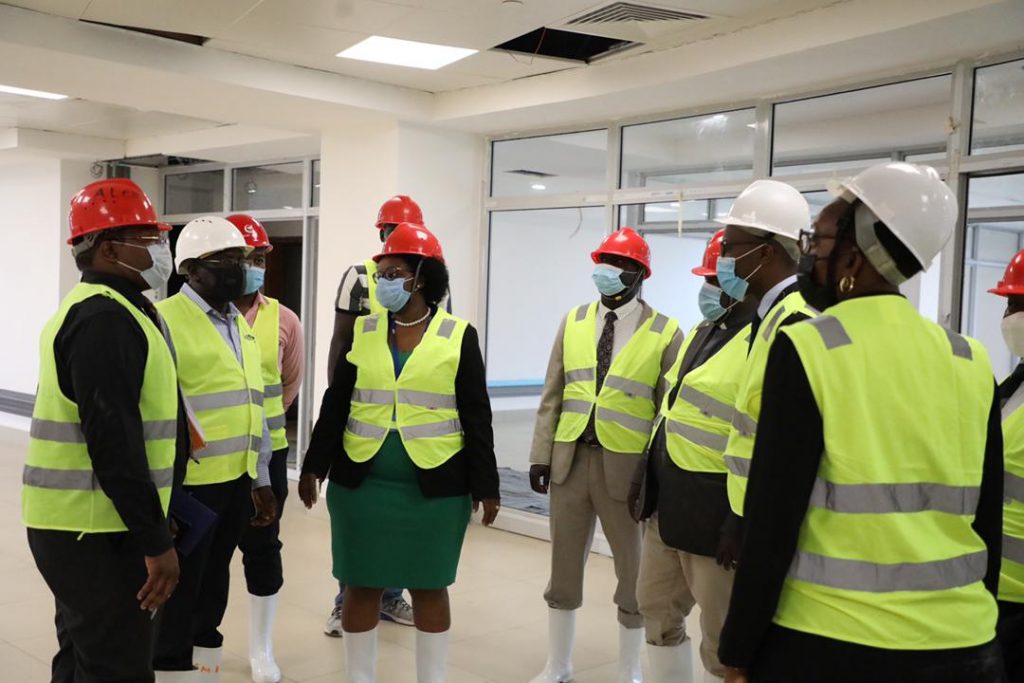
Completion works on the Uganda Business Facilitation Centre (UBFC) in Kololo are now at 75% with the building expected to be completed in July 2021. The development was revealed during a guided tour of the facility by URSB Board led by the Chairman Ambassador Francis Butagira accompanied by the Registrar General Mercy Kainobwisho. The 12 floor-storied, four-basement facility will house the Uganda Registration Services Bureau (URSB), Capital Markets Authority and Uganda Investment Authority to work in an integrated manner in providing the business community and investors with the necessary documents they need to facilitate business and investments process in the same building.

Addressing a meeting that comprised the contractors, board members and other officials, Ambassador Butagira said the excellent work culture prevailing at URSB has contributed significantly to the remarkable achievements the organization has achieved and the credit goes to the officers and staff for these unwavering efforts.

The initiatives taken by the URSB with support from the Government & other stakeholders towards transformation have become a model to emulate for many other organisations, he said. “As the board, we have made remarkable achievements together with management. it is now time to concentrate on development of infrastructure to meet the expectations of our clients. The Uganda Business Facilitation Centre will offer URSB with better stature to cement their mandate. The fact that the facility also houses other partner agencies involved in the ease of doing business which will enable faster transaction times in service delivery across all services” Butagira added

With the construction now in the completion stages, he reiterated that work is not yet over. ‘ ‘We have to deliver world-class services that match the standards of this new office building in order to satisfy our clients’ needs’ Butagira said

Commenting on the progress of the construction works, the Registrar General, observed that the new offices are much more spacious and that they evidently present a good working environment for staff. “The new offices look fantastic. We hope that this environment will provide staff with facilities that will make their work more enjoyable and productive,” Kainobwisho said.

The move to a permanent head office is a major milestone for URSB as it will save on the enormous amounts of money spent on renting facilities while giving the organization a stable repute and comfortable working conditions. “The new office provides a more conducive environment for staff and for our work. It also provides enhanced security since access to the office is controlled by finger imaging. We thank the Board, Government of Uganda and the World Bank for support in approving resources that facilitated this construction,” noted the Registrar General

The building will also house a One Stop Centre with over 15 service points which will improve service delivery to the private sector by ensuring that less time is taken in registering and starting a business. The country’s business ranking improved by 11 positions from 127th to 116th out of 190 economies on the backdrop of reforms geared at making it easy for investors to start a business.

The UBFC is being undertaken under the Competitiveness & Enterprise Development Project (CEDP), as a Government of Uganda project funded by the World Bank and coordinated by the Private Sector Foundation.

URSB and Stanbic Business Incubator announce partnership to support MSME growth & sustainability

An exciting new partnership was announced today between Uganda Registration Services Bureau (URSB), a semi-autonomous Government agency charged with formalization of businesses and registration of intellectual property, and the Stanbic Business Incubator which provides training, mentoring and business development services for Micro, Small & Medium Enterprises (MSMEs).

The main aim of the joint collaboration is to support and drive economic growth in Uganda through enabling formalization for MSME’s, training them to overcome some of their challenges while nurturing innovation through protection of intellectual property and commercialization of creations. “URSB is proud to welcome the Stanbic business incubator to the growing number of support entities that are keen on enhancing the business growth environment. Our core focus is not to only support businesses to formalize, but we also ensure that they thrive, get commercial value from their innovations and grow. This partnership that is geared towards creating innovation hubs presents a truly transformative approach for growing our economy through business’’ Mercy K Kainobwisho, the Registrar General said.

URSB has over the years been involved in efforts to formalize business operations for the bulk of MSMEs who form over 80% of Uganda’s business sector and has front-led collaborative efforts to stimulate innovation, accelerate ease of doing business and continuously provide support services to keep entrepreneurs in business. Tony Otoa, the Chief Executive Officer of Stanbic Business Incubator said the partnership would help support and nurture MSMEs to prepare for and harness business and growth opportunities. “We are always looking towards partnering with entities that have similar interests in supporting businesses to thrive. Our intensive training in entrepreneurial attitude, financial literacy, business analysis and planning as well as compliance and corporate governance are a timely addition to URSB’s services that promote the ease of doing business and nurturing of innovations”

As part of the announcement, the collaboration will also will focus more on the creative industry leading to the creation of an innovation hubs to attract, nurture and support innovative entrepreneurs protect their creations, besides helping them attract financing using their intellectual property as collateral.

Another exciting aspect of this new partnership is that URSB and the Stanbic business incubator programme will offer MSME mentorship and training programmes across the country to encourage nation-wide business support. The two will also explore opportunities how to onboard Local Governments who have been identified as fertile grounds for starter innovators that need mentoring.

URSB Partners With Higher Institutions To Protect Intellectual Property Innovations

Kampala, Uganda; Intellectual property (IP) protection has been deemed critical for protecting Uganda’s proprietary designs, processes, and inventions that, if leaked to competitors or made public, could ruin the country’s market advantage across the world. This call was made at the 2nd Higher Education Partnerships in Sub Saharan Africa (HEPSSA) workshop at Makerere University in Kampala on Friday 29th January, 2021. The HEPSSA project, supported by the Royal Academy of Engineering (UK), aims to support the enrichment of engineering programmes that will lead to development of skills for the much needed engineering capacity in the region while the Uganda Registration Services Bureau (URSB) is the Government agency mandated with the registration and protection of intellectual property rights across the country. The Universities in attendance were Makerere University, Mbarara University of Science & Technology, Busitema University, Kyambogo University and Ndejje University.

 According to the World Intellectual Property Organization (WIPO), intellectual property refers to “creations of the mind: inventions, literary, and artistic works, and symbols, names, images, and designs used in commerce. IP is divided into two categories: industrial property, which includes inventions (patents), trademarks, industrial designs, and geographic indications of source; and copyright, which includes literary and artistic works such as novels, poems and plays, films, musical works, artistic works such as drawings, paintings, photographs and sculptures, and architectural designs. Rights related to copyright include those of performing artists in their performances, producers of phonograms in their recordings, and those of broadcasters in their radio and television programs.”

Speaking at the  Workshop, James Tonny Lubwama, the Manager, Patents & Industrial Designs at URSB emphasized that universities in Uganda were creating engineers who are at the front line of innovation. To tap this potential, URSB has worked on partnerships with engineering and arts faculties across higher institutions of learning as a means of supporting and enhancing knowledge on the subject of intellectual property for young creators. ‘As creators, engineers often share intimate details of their clients’ designs, materials, products, and processes, which are always highly confidential work. Other scientists, however, are more interested in focusing on the technology and don’t always realize the finer points of protecting IP. As URSB, we are open to helping our innovators have their creations fully protected so that they can enjoy the benefits from their proprietary works and designs’ Lubwama said

Drawing attention to some of the outstanding creations from universities, like the Vehicle Design Project at Makerere University that resulted into the creation of the Kiira EV car, Lubwama said such projects can only succeed if they fully protect their innovations right from the start in order to enjoy their proprietary rights.

“Enthusiastic innovators are often under pressure to give presentations at research workshops about the research and development they have completed,”  Lubwama added. “If any of these public disclosures include a discussion on something that a young engineer wishes to patent, a patent application should be filed with URSB before such disclosures occur. They must be vigilant about not sharing any conceivable IP before patent application occurs, or discussing it with other engineering colleagues or friends”

To support innovation across universities, URSB has over the years been involved in the Technology & Innovation Support Centres (TISC) project, an initiative of the World Intellectual Property Organization (WIPO) that aims to improve the quality of research by ensuring that researchers have free access to high quality information mostly available through patent and non-patent databases. The TISC project also aims to ensure that the Intellectual Property created from research is appropriately protected through proper licensing, commercialization and management.

Mercy Kainobwisho Unveils Her Vision For The Future Of URSB As Registrar General

0

Our Reporter.

The official Government Receiver and new Registrar General of Uganda Registration Services Bureau (URSB), today unveiled her strategic plan for the organisation’s future, and announced key initiatives to drive URSB’s vision as the centre of excellence for reliable registration services.

Ms. Mercy K. Kainobwisho who spoke at a management retreat for Directors, Managers and Senior Staff took time to outline her strategy dotted with aspirations to be achieved during her time of service. The Registrar General emphasized that she would direct her efforts to further strengthening URSB rather than “reinventing” it.

“We can’t change 2020 but we can learn from it to emerge stronger and get better as an organisation and oneself. As we start off a new year, we hope through rolling-out our 2021 objectives that we will make 2021 count for all our stakeholders”. She stated. “My team and I are looking forward to creating a new beginning for URSB – one that is customer-driven, service-oriented, technologically set and that will place our organisation in the forefront of the public service sector for the 21st century. Our collective knowledge, operational expertise, services experience, interpersonal skills and leadership abilities will serve us well as we confront any challenges that lie ahead”.

In calling for a new beginning for URSB, Ms. Kainobwisho emphasized her intention to build upon URSB’s existing employee base to create a team that is unmatched in the Government services category. “We have a strong, unified workforce – one that now has a very personal stake in the way we deliver services to our clients,” Mercy said. “URSB’s accomplishments will be a direct reflection of the responsibility and pride of service from each and every employee.”

Kainobwisho noted that together with her team, she plans to immediately address customer service and turn-around time issues, such as the time it takes to deliver on a customer’s submission and how long a customer has to wait to speak to a service representative. She also reiterated URSB’s commitment to ensuring that registration services continue to support Government’s economic vision of formalizing the economy, easing the doing of business, strengthening the basic of society through stable marriages, supporting creativity, innovation through intellectual property rights and rescuing ailing entities

“We have immense opportunities before us, and we intend to seize them with the understanding that change takes time, and we must be realistic in our expectations. We have one goal in mind, and that is to make URSB the best public services agency, which, in turn, support the livelihoods of people, collect revenue for government and support the social economic vision of our nation. We are ready to get started.”

The retreat also provided an opportunity for senior management to discuss at length areas of focus for URSB in the upcoming months and share ideas on how to support each other to realize the organisation’s  mandate as envisioned in the 3rd strategic development plan (SDP III) which plugs into the National Development Plan.