Home Blog Page 24

2022 HiPipo Music Awards Nominations Open

0

The much-awaited 11th Edition of the annual HiPipo Music Awards is upon us. On 18th November 2022, at Kampala Serena Hotel, there will be celebration and enjoyment that will go down in the ages as some of the best ever!

HiPipo remains one of Uganda’s and indeed Africa’s most dynamic organisations, a brand whose innovations and initiatives are increasingly renowned for their positive impact on livelihoods and communities.

Our annual HiPipo Music Awards are recognised not just for the critical acclaim and prestige they bestow on their winners and nominees, but, as of now, their longevity as well.

HiPipo is proud to keep going from strength-to-strength; we have learnt a lot over time, starting from the first awards event, which was an online virtual experience, held in May 2012.

We keep refining and redefining our processes, and thus how we nominate, vote and select winners is continually fine-tuned. This is because we never forget that it is music fans/supporters’ right to make choice of and nominate, the proverbial crème de la crème.

And so, here is your chance to nominate your best acts and artists for the 11th HiPipo Music Awards. Nominations close on Sunday 2nd October.

AFRICA

  1. Africa Number 1
  2. Africa Best Act

EAST AFRICA

  • East Africa Super Hit
  • East Africa Super Video

UGANDA

  • Artist of The Year
  • Song of the Year
  • Video of the Year
  • Breakthrough Artist
  • Digital Music Queen of the Year
  • Best Regional Song
  • Most Viral Song
  • Lifetime Achievement Award

2022 Digital Impact Awards Africa Open for Nominations

Following the consecutive eight seasons of Digital Impact Awards Africa, we are glad to announce that entry submissions for the 2022 edition are open.

Digital Impact Awards Africa is a platform that promotes Digital Inclusion, Financial Inclusion, and Cyber Security. The Awards recognize and celebrate stakeholders that are spearheading the use of digital mediums to serve communities.

The Digital Impact Awards Africa celebrates digital excellence across the continent, big or small, local or international.

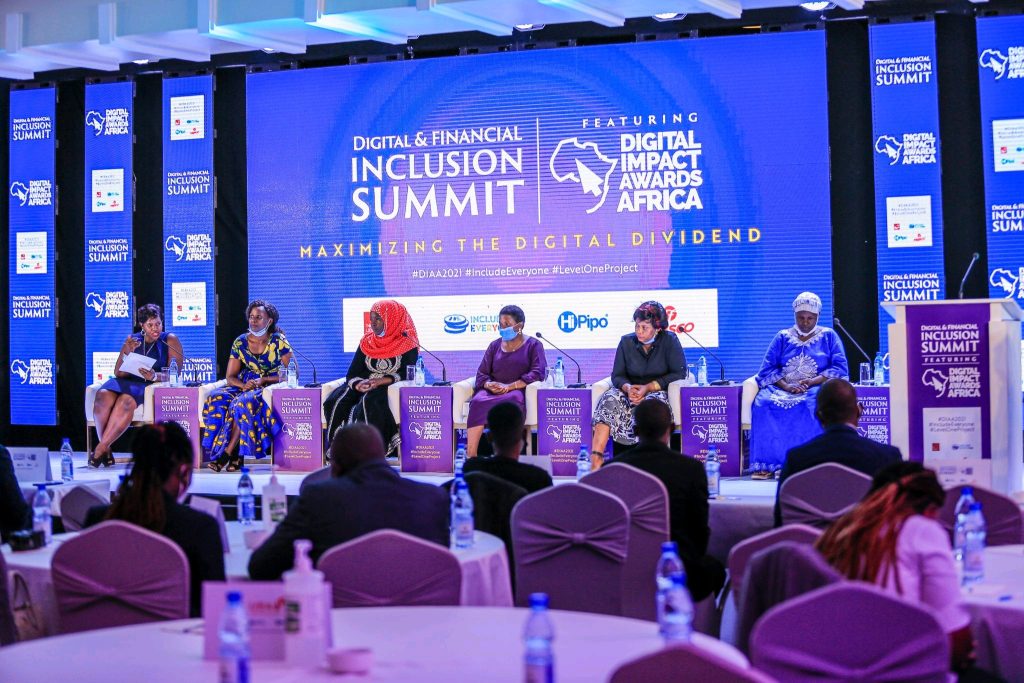
The 9th edition is slated for 18th November 2022 at Kampala Serena Hotel as part of the annual Digital and Financial Inclusion summit.

The summit explores strategic trends and technologies that are shaping the future of Digital, ICTs, and Business. Special attention is paid to the safety of customers’ funds and the security of platforms in the Digital Financial Services ecosystem. 

This year’s summit will bring together C-Level executives that are spearheading the scaling, adoption, and usage of digital and financial services across Africa. The summit will discuss the disruptive impact of COVID-19 on the business ecosystem and what players are doing to recover.

Speakers will come from multinationals, large enterprises, small and mid-sized enterprises, and start-ups. Additionally, the summit will offer a platform for informal businesses (like market vendors, smallholder farmers, sole proprietors, public transporters, e-commerce delivery agents, etc.)   

The summit and awards are using these 3 official tags; #IncludeEveryone #DIAA2022 #LevelOneProject. 

Now is the time for you to nominate your best service provider, products, and brands: Just visit https://bit.ly/3KvUEZn  

Here is the full list of categories open for nomination. 

  1. Financial Inclusion Excellence
  2. Digital Banking Excellence
  3. Banking Innovation Excellence
  4. Community/MFI Banking Innovation Excellence
  5. FinTech Innovation Excellence
  6. Financial Services Digital Excellence
  7. Consumer Goods Digital Excellence
  8. Utilities and Government Services Digital Excellence
  9. Technology Services Digital Excellence 
  10. Digital Campaign Excellence 
  11. Digital Brand of the Year

TradeMark East Africa Announces New Chief Executive Officer

Senior diplomat and development professional, former United Kingdom High Commissioner, adviser at World Bank and IMF boards to lead one of the world’s largest Aid for Trade institutions

Mr. David Beer has been appointed the new Chief Executive Officer (CEO) for TradeMark East Africa (TMEA) and succeeds Mr. Frank Matsaert, TMEA’s founding CEO. He will assume the position from 1st September 2022 and will be based in Nairobi, TMEA’s headquarters. 

David Beer has recently completed his tour as High Commissioner for the United Kingdom (UK) in Malawi. 

The TMEA Board conducted a rigorous selection process to select a CEO with strong experience of the nexus of aid for trade, Governments and diplomacy, multilaterals, and development, positioning him to provide continuity of purpose.  Mr. Beer has over 20 years’ senior international experience within these sectors. He previously represented the UK, advising respective UK Executive Directors to the Boards of the World Bank and International Monetary Fund on areas such as institutional risk management, adaptive programming and disaster risk financing, alongside macro-economic management and development programming. This builds on many years of leading development efforts for the British Government and other organisations across Africa, including Uganda, Sudan, Burundi, and Ghana.

Mr. Beer joins TMEA at a time when the organisation is expanding to the rest of Africa and scaling up support for the implementation of Africa Continental Free Trade Agreement. TMEA has innovated its programming to not only reduce trade barriers through improved transportation systems, digitalisation of key trade processes, and targeted interventions supporting Small and Medium Enterprises in critical sectors; but also developing a US$220 million Green Corridors programme that will ensure climate resilient infrastructure and transport models are adopted. Additionally, TMEA has secured funding to start up its new commercial arm – Trade Catalyst Africa – that will catalyse commercial capital into the organisation’s infrastructure and digital workstreams.  

As founding CEO of TMEA, Mr. Frank Matsaert has led the institution for more than a decade through periods of momentous growth, strong delivery, and external challenges. The most recent being the COVID-19 pandemic which inflicted a global recession and in response TMEA created its awardwinning Safe Trade programme that helped mitigate the impact of the pandemic on Eastern African trade. Mr. Matsaert spearheaded expansion beyond East Africa to now include the Horn, Southern and West Africa, and raising TMEA funding from an initial US$42 million to US$1.2 billion by April this year. Mr. Matsaert has worked tirelessly to develop TMEA’s strategy and implementation model to achieve large-scale impact; champion staff welfare, inclusion, and diversity; and promote TMEA beyond its traditional donors to now include Foundations. Consequently, David will be inheriting an organisation with an excellent record for achieving results, with a professional and dedicated management team which displays all the values on which TMEA prides itself. 

TMEA Board Chair Ambassador Erastus Mwencha said, “David’s extensive government and trade development skills should help TMEA strengthen its programming, develop strategic alliances, and roll out fit-for-purpose products that respond to market needs at macro and micro level so Africa can maximise its trade potential. We believe his strong leadership experience will help focus TMEA during these turbulent economic times and stabilise its funding base.”

About TradeMark East Africa 

TradeMark (Trade and Markets) East Africa is an aid-for-trade organisation that was established in 2010, with the aim of growing prosperity in East Africa through increased trade. TMEA operates on a not-for-profit basis and is funded by the development agencies of the following countries: Belgium, Canada, Denmark, the European Union, France, Finland, Ireland, Netherlands, Norway, United Kingdom, and United States of America. TMEA works closely with regional intergovernmental organisations, including the African Union (AU), Africa Continental Free Trade Area (AfCFTA) Secretariat, East Africa Community (EAC), Intergovernmental Authority on Development (IGAD), Common Market for East and Southern Africa (COMESA), Southern Africa Customs Union (SACU), National governments, the private sector, and civil society organisations.

TMEA, with an annual expenditure of approx. US$80 million, is now one of the leading aid-for-trade facilities in the world. 

The first phase of TMEA (2010-2017) delivered exceptional results which contributed to substantial gains in East Africa’s trade and regional integration in terms of reduced cargo transit times, improved border efficiency, and reduced barriers to trade.  

The second phase (2017-2024) is focusing on: 

1. Reducing barriers to trade; and 

2. Improving business competitiveness. 

We believe this will deliver large-scale impact in job creation, poverty reduction, and enhanced economic welfare.

TMEA is expanding its operations beyond Eastern and Horn of Africa, innovating its programming, and commercialising some of its initiatives. We are positioned to support the implementation of the AfCFTA in a wider continental context; similarly facilitating a newly developed Green Corridor Approach to reduce Greenhouse Gas emissions along trade and transport corridors. 

TMEA has its headquarters in Nairobi, Kenya, with offices in EAC-Arusha, Burundi (Bujumbura),

Democratic Republic of Congo (Bukavu), Djibouti (Djibouti), Ethiopia (Addis-Ababa), Somaliland (Hargeisa), Malawi, Mozambique, Rwanda (Kigali), South Sudan (Juba), Tanzania (Dar es Salaam), Uganda (Kampala) and Zambia.

To find out more, please visit website www.trademarkea.com  

HiPipo unveils the 2022 Women in FinTech Hackathon, Summit, and Incubator; on-boards participants from across East Africa.

Kampala, Uganda: When you empower one woman, you have in fact supported an entire family. This is no longer an optimistic opinion but a statement of fact.

This is why HiPipo is keen to empower women with the required digital and financial inclusion skills so that they can go out there; innovate, prosper, earn and develop their families and communities. 

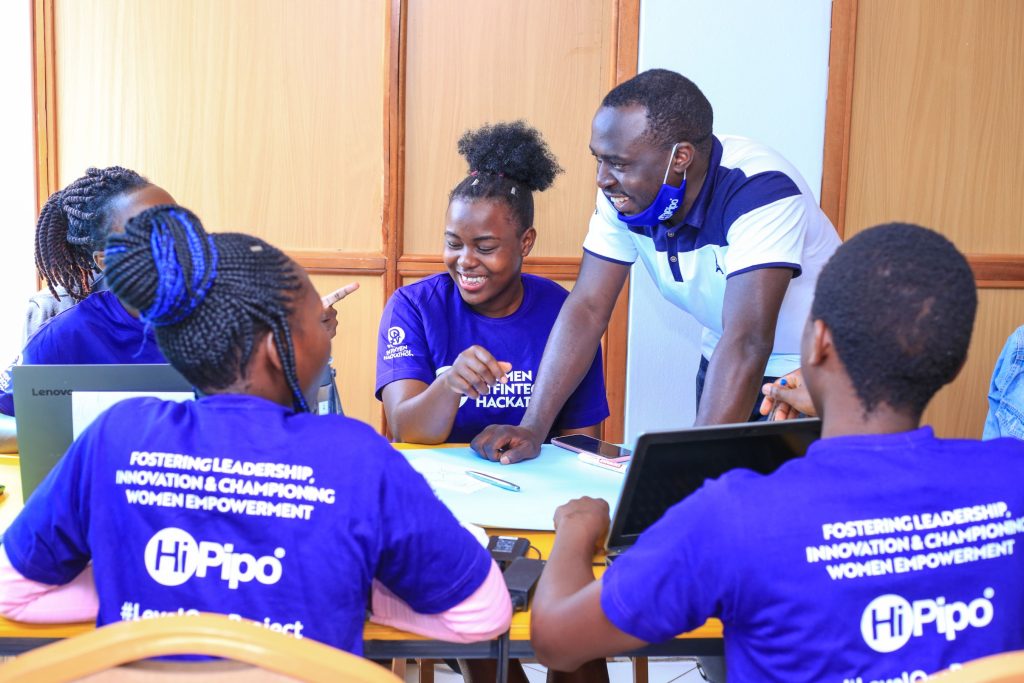
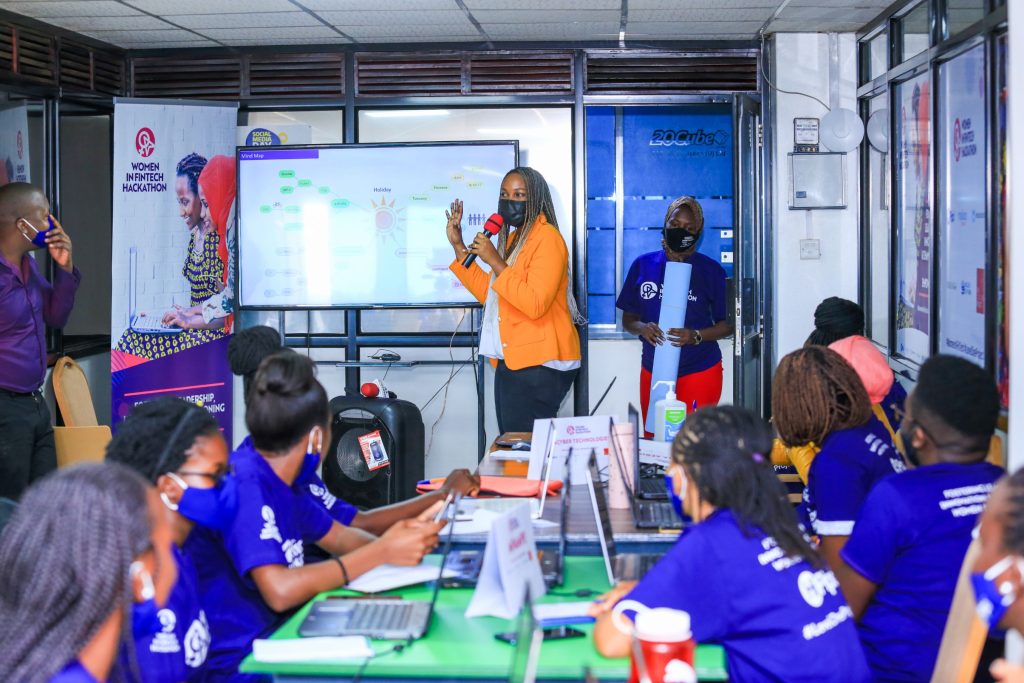
In both 2020 and 2021, HiPipo deliberately and in full adherence to COVID-19 safety protocols implemented the Women in FinTech Hackathon, Summit, and Incubator. The cardinal purpose of these inter-twined initiatives was, and still is, to champion women’s financial inclusion through active participation in the initiation, development, and rolling out of financial technology products that are well tailored to serve women and everyone. And indeed, the HiPipo Women In FinTech initiative is exceptionally supporting efforts toward closing the Gender Gap in Access to Technology, Skills, and Usage of Digital Financial Services.

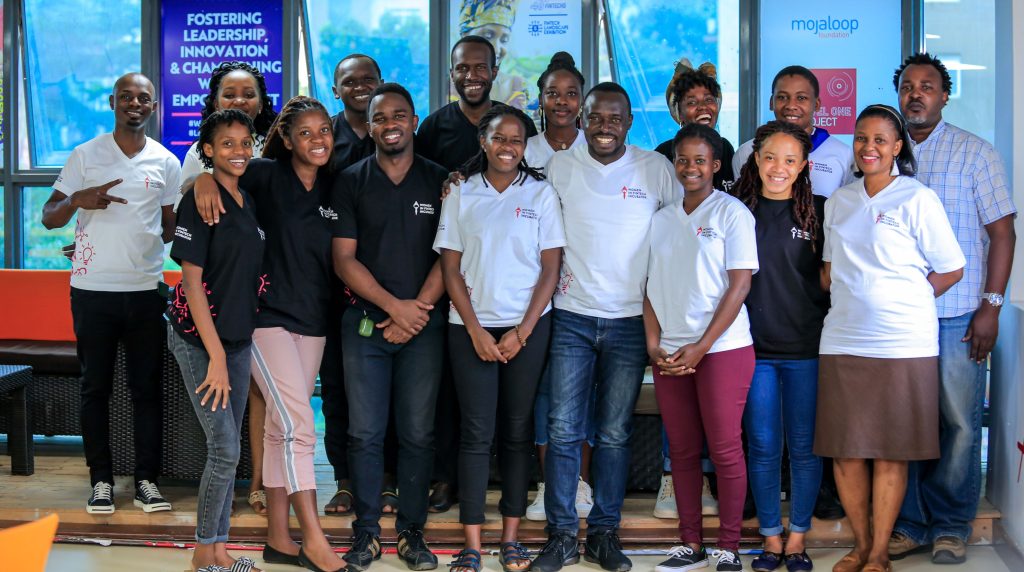
The impact of these initiatives is out for all to see. More than 100 women have been trained and equipped with the latest FinTech skills, and at least 10 products have been initiated and taken to the market by Women in FinTech participants, in addition to individual participants and teams getting seed capital from both the project and external contributors to further pursue their ideas.

This success is thanks to HiPipo’s thoughtful Women Inclusion efforts and the commitment of its partners: Level One Project, Mojaloop, ModusBox, and Crosslake Technologies. Even so, all this may have remained a good paper concept or a somewhat deferred dream had it not been for the generous support of the Bill and Melinda Gates Foundation.

This story is set to continue this year with the Women in Fintech Hackathon and Summit finale slated to run from 10th to 16th September 2022 while the Incubator program will run from late October to the end of January 2023. This year’s edition will be bigger and better with the entry of CyberPLC Academy as a strategic implementation partner.

The 2022 Women in FinTech Hackathon seeks to close the Gender Gap in Access to Technology, Skills, and Usage of Digital Financial Services. It will provide women innovators and students an opportunity to use digital financial technology to explore business concepts. The hackathon will introduce participants to useful tools and offer an introduction to technologies such as Mojaloop Open-Source Software, and guidance from Level One Project foundational material. The skills gained from this initiative will cover Level One Project Principles, Instant and Inclusive Payment Systems (IIPS), Inclusive Finance, and FinTech in general.
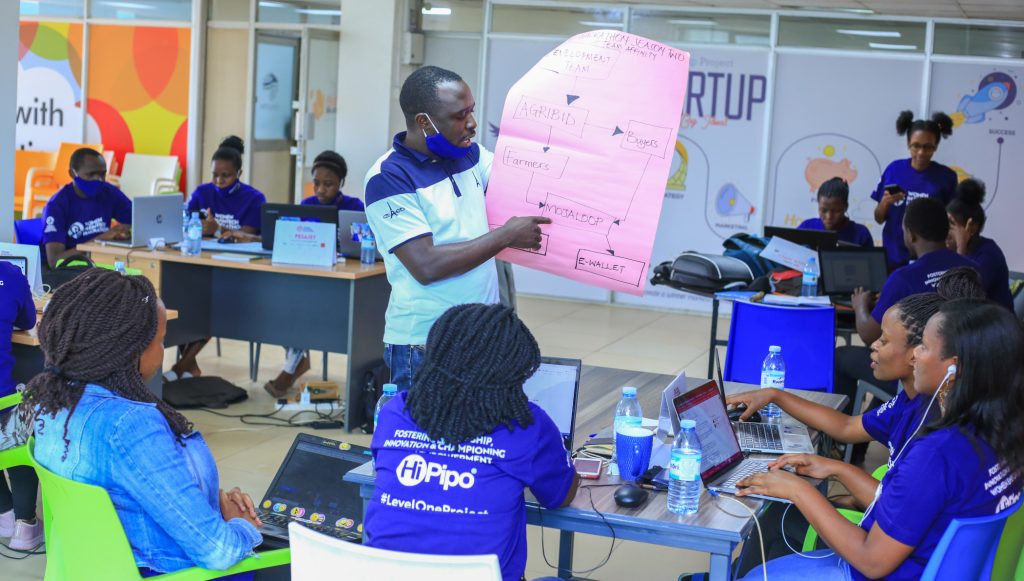
“Our ultimate objective is to help achieve a leveled playing field by guiding the African continent into fully maximizing its digital dividend and potential, with the entire populace equitably participating in the use, leverage, dissemination, innovation, adoption, and adaptation of secure digital financial services to improve their lives and livelihoods,” Innocent Kawooya, the HiPipo CEO noted.

On-boarding East Africa participants.

The 2022 edition will kick off with a virtual East African round that will have participants from across the region taken through daily training and assessment for 5 days (29th August to 2nd September), with the top team from each country automatically qualifying for the grand finale to be held in Kampala.

Interested participants from Kenya, Tanzania, Rwanda, Burundi, and South Sudan will register for the virtual round between 17th and 26th August while Ugandan participants will submit their entries from 20th to 29th August.

The hackathon is open to women-led teams of 2 to 4 members, with each team having at least 67 percent female composition.

“We are excited about this year’s edition. The past two editions have been highly impactful with different participants being able to take their innovations to the market while others are in the process. The third edition is going to be bigger and better as we welcome East African participants. We are indebted to our partners, and supporters and commit that we shall not stop because financial inclusion is a right for everyone,” Kawooya noted.

The Women in FinTech Hackathon will culminate in the Women in FinTech summit where the best performing teams and individuals from across East Africa will be announced and receive their share of the USD 10,000 collective prize money. This will be in addition to automatically qualifying for the Women in FinTech Incubator program that will run until January 2023.

So ladies; there you have it. Get ready to register, prepare to develop, learn and shine. More details will be shared in due course.

In case of any queries, reach out via socialweb@HiPipo.com

Speech by Joyce Nabbosa Ssebugwawo, the state minister for ICT at the 2022 FinTech Landscape Exhibition

Hon. Joyce Nabbosa Ssebugwawo, the state minister for ICT has challenged the youth to use technology to find solutions to pressing issues such as employment and poverty.

The minister made these remarks while giving her speech at the 2022 FinTech Landscape Exhibition held at Mestil Hotel. She was the guest of honour.

Below is her full speech.

I am so thankful and grateful for choosing me as your chief guest at this 3rd Fintech Landscape Exhibition 2022.

We are very happy to see that Information and Communication Technology (ICT) has transformed the financial infrastructure not only in Uganda but worldwide. For example, Africa and other Emerging Markets have utilised ICT-based financial services to enable the delivery of innovative, inclusive, affordable and instant financial products to the poor and vulnerable groups.

Digital financial services have helped to complement physical banking infrastructure which has traditionally been used. This has enabled the establishment of closer relationships with customers and the creation of convenience tailored offerings. Customers have benefited from more personalised, secure and affordable financial services. In addition, the government of Uganda is developing universal financial systems that are vital to sustainable and inclusive growth.

Digital Financial Services (DFS) support sustainable and inclusive growth by facilitating the delivery of affordable and innovative financial products to poor and vulnerable groups. Additionally, Digital Financial Services facilitate the creation of efficient and effective payment infrastructures. The government is working to ensure that regulatory frameworks balance support for digital financial service innovation whilst managing systemic risk and compliance with Money Laundering/Combating the Financing of Terrorism (AML-CFT) standards.

The digitization journey is a beautiful and longstanding one that has seen all of us transform as a nation from the times of wired telephones, the voice only enabled mobile devices to now micro hand banks that enable citizens to pay for bills, utilities, and other services in the comfort of their bedrooms, workstations or offices.

The Ministry of ICT and National guidance in partnership with other government agencies, donors, private investors and innovators have been pivotal at ensuring internet connectivity becomes for seamless, democratic, and more affordable every year. For instance, a gigabyte of data that costed an average of 60,000 Uganda shillings in 2011 now costs an average 5,000 Shillings and this is only going to get more affordable.

We applaud HiPipo for championing digital, Financial Technology (FinTech) innovation and instant and inclusive payments systems (IIPS) across Africa under the #IncludeEveryone Program in partnership with the Gates Foundation among other partners.

We clearly appreciate that HiPipo advocates for and supports the adoption of digital financial services (DFS) through advising and mobilising key financial inclusion stakeholders. For example, this year, HiPipo delivered the third season of #40Days40FinTechs event, which was organised in face-to-face locations in Uganda, Kenya and Tanzania covering areas, such as Mojaloop, and offering guidance on Level One Project principles.

I am glad to officiate the culmination of season three of 40 Days 40 FinTechs initiative here at the third FinTech Landscape Exhibition.

Thanks to the HiPipo Include Everyone initiative, guidance on Level One Project and its principles and Instant and Inclusive Payment Systems has been shared over the years and  there’s growing opportunities such as the rising understanding of stakeholders and users alike of the;

  1. Need for making use of Digital Financial Services to support the establishment of sustainable and inclusive growth by facilitating the delivery of affordable and innovative financial products to poor and vulnerable groups.
  2. FinTechs and their collaborators are making it easier and cheaper for customers to engage with the formal financial inclusion ecosystem.
  3. FinTechs are encouraging transactional account usage through intuitive mobile apps (with a few growing super apps) and USSD-based innovations thanks to the momentum this initiative is causing to the market.
  4. Digital Financial Service Providers and FinTechs are partnering to provide cheaper, timely credit by rethinking creditworthiness, and remodelling the traditional bureaucratic lending models.
  5. Thanks to the HiPipo Include Everyone Program, and the viral conversation on interoperability and collaboration, Digital Financial Service stakeholders are reducing credit and insurance costs for smallholders and other excluded groups. Things such as micro-insurance policies have been introduced.
  6. This exceptionally useful Include Everyone trend is helping push FinTechs and Banks to wave unexpected costs on loans and other financial services that low-income users used to incur to onboard onto formal financial rails.

On my behalf and on behalf of the Ministry of ICT and National Guidance, and the government of the Republic of Uganda, I wish to congratulate participants of season three of the 40 Days 40 FinTechs initiative and also take this opportunity to Thank HiPipo; the organisers of this program and their partners the Gates Foundation, Mojaloop Foundation, CyberPLC, Modusbox, Crosslake Technologies and #LevelOneProject for putting up such an exceptional event.

For GOD and My Country.

Hon. Joyce Nabbosa Ssebugwawo

Minister OF STATE FOR ICT

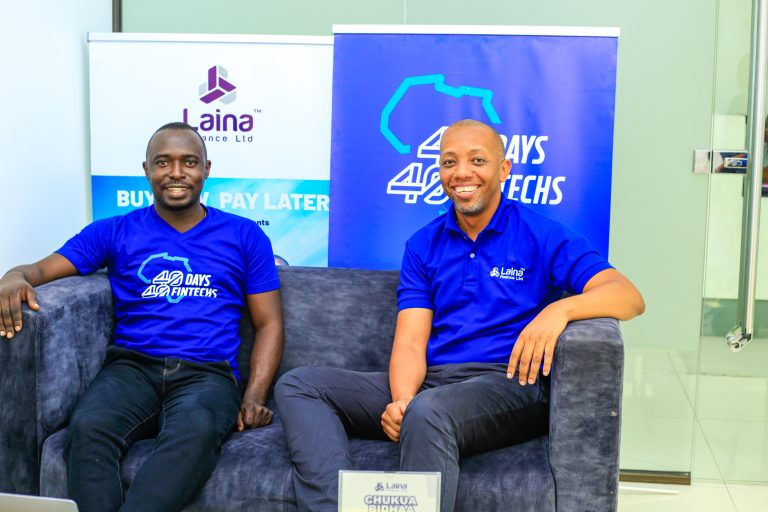
Laina Finance is using FinTech to enable the purchase of electronic devices on credit

Our Reporter.

With the advancement in technology, there is always a need to upgrade from one smartphone to another, from one television set to another, from one camera to another, etc.

For some, such upgrades are necessary in order to meet their daily commitments such as work, family, and community responsibilities while for others, upgrading from one device to another is trendy and a show of class and social status.

For whatever reason, the cost of the latest devices is usually a turnoff for the majority. As such, they can’t hold the phone of their dreams because they can’t afford a single one-off payment.

Such scenarios are what Laina Finance is addressing in Tanzania. Through partnerships with mobile network operators (MNOs) and finance institutions, Laina Finance is enabling hundreds of Tanzanians to acquire their preferred devices on credit and pay later in installments until the total cost is cleared. Laina is a Finnish word that means a Loan in English.

Laina Finance is an integrated non-deposit-taking micro-finance service provider that extends payment plans for the purchases of goods and services by allowing customers to pay over a period of three to nine months. It offers micro-finance payment plans for electronic devices (smartphones and other home gadgets) and insurance policies.

The company has developed a digital financing platform that includes risk management, a credit decision engine, and a loan management system. This platform enables Laina Finance to make instant decisions on the issuance of micro-loans or purchase finance plans.

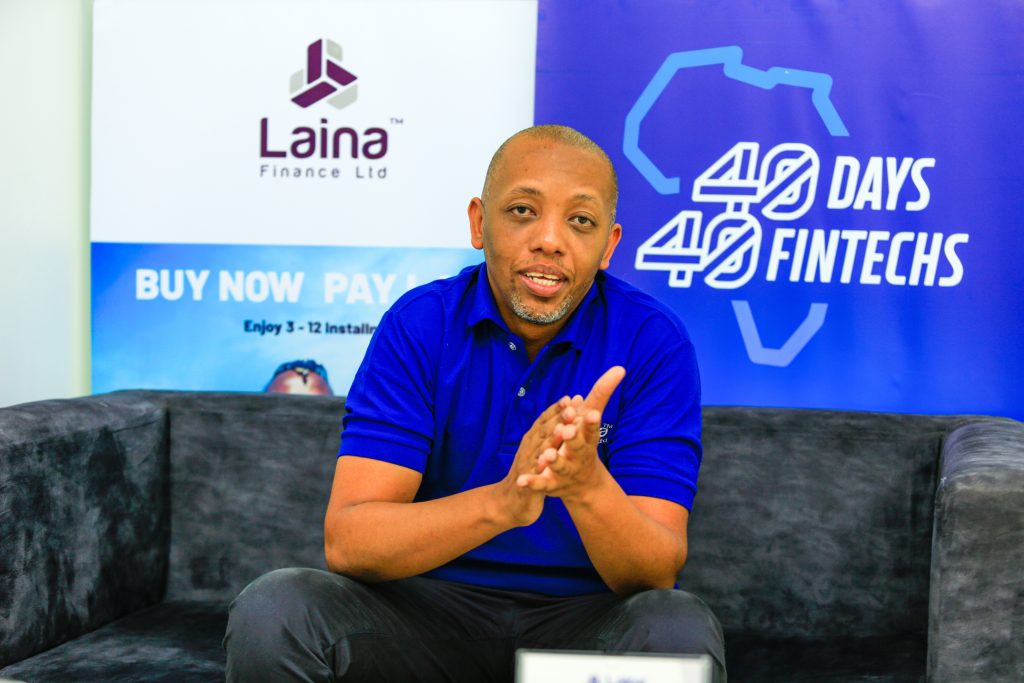
“There is a lack of credit-based payment options. In developed countries, there are credit cards that support credit purchases. Here, there are very few options. That is the space we are trying to address. We are addressing the issue of affordability and also supporting businesses to grow,” Tonny Missokia, the business development director at Laina Finance said, adding; 

“With the introduction of flexible payment options, we have statistics that show that the businesses we are working with have increased their sales and also eventually got profitable.”

Altogether, Laina Finance’s portfolio is over USD 400,000, with the company allowing instant and real-time transactions between both businesses and clients.

 “We have issued out around 7000 payment plans currently for different consumers in different segments including government and non-government employees and mere mobile subscribers without bank accounts. The majority of our clients are unbanked – about 70 to 80 percent and the other segment is for salaried clients. About 24 to 27 percent of the users of this service are women. We have reached close to 400 business partners around the country,” Missokia said. 

Based in Tanzania, Laina Finance is participant number 47 in the 2022 40 Days 40 FinTechs initiative organized by HiPipo in partnership with Level One project, Mojaloop, ModusBox, and Crosslake Tech and supported by the Gates Foundation. It is also the final participant of this year’s edition.

Its good financial inclusion works are already getting international recognition with a continental award already in the bag.

“This year we have been lucky. We won the award for the best FinTech providing device financing in Africa during a tech event in France. It was quite an eye opener for us to learn that there is a big ecosystem to support FinTechs,” Missokia said. 

He added: “Even though here in Tanzania we are still at a very infant stage, such platforms motivate us. Such platforms include the 40 Days 40 Fintechs initiative that is traversing the East Africa region and giving FinTechs a chance to tell their story and also learn from one another. Thank you for coming up with such a movement that is giving African FinTechs a chance to be noticed.”

The #40Days40FinTechs platform is run under HiPipo’s Include Everyone program that also encompasses other initiatives such as FinTech Landscape Exhibition, Women in FinTech Hackathon, Summit & Incubator and the Digital and Financial Inclusion Summit and Digital Impact Awards Africa.

It offers participants useful tools and an introduction to the industry’s emerging technologies, such as Mojaloop Open Source Software, and guidance from Level One Project foundational material. The skills gained from this initiative cover Level One Project Principles, Instant and Inclusive Payment Systems (IIPS), Inclusive Finance, and FinTech in general.

This year’s edition has covered physical locations in Uganda, Kenya, and Tanzania.

“It is exciting how this season has turned out. We conclude with Laina Finance, a company that is giving hundreds of Tanzanians a chance to purchase personal electronics and pay later. This is clearly one way of having more people join the digital economy as it allows upgrade from a feature phone to a smart device,” Innocent Kawooya the HiPipo CEO noted.

He added: “This year we received over 100 submissions from all over Africa and have been able to feature 47 participants based in Uganda, Kenya, and Tanzania. All these have unique stories and are addressing real financial inclusion issues. We featured the biggest FinTechs and the most promising start-ups.”

The 2022 40 Days 40 FinTechs initiative will culminate in the FinTech Landscape exhibition to be held on 12th August at Mestil Hotel. The FinTech Landscape exhibition will give participants a chance to physically meet, interact and appear in different panel discussions.

Remmo is using FinTech to digitize wedding contributions and fundraising causes

Our Reporter.

In the African culture, whenever a young man is going to marry his bride, it is taken as a collective responsibility for the community to make contributions towards the success of the celebrations. This is always done through wedding meetings where people converge and manually collect money, while others make pledges and fulfill them at the next meeting.

However, besides the hardship of attending physical meetings, stories are told of treasurers who have misappropriated these contributions and eventually the weddings turn from celebrations to disappointments.

In 2020, a group of tech enthusiasts in Tanzania decided to prevent these scenarios by introducing a mobile platform where people can automatically make pledges and contributions without attending a physical meeting or paying cash.

Named the Remmo App, someone (it may be the bride or groom or any of their trusted representatives) just goes to this platform and creates a pledge account. Then they are required to fill in some data, such as the type of ceremony they want to conduct (it may be a wedding, send-off, birthday party, etc) and then they receive a unique identity.

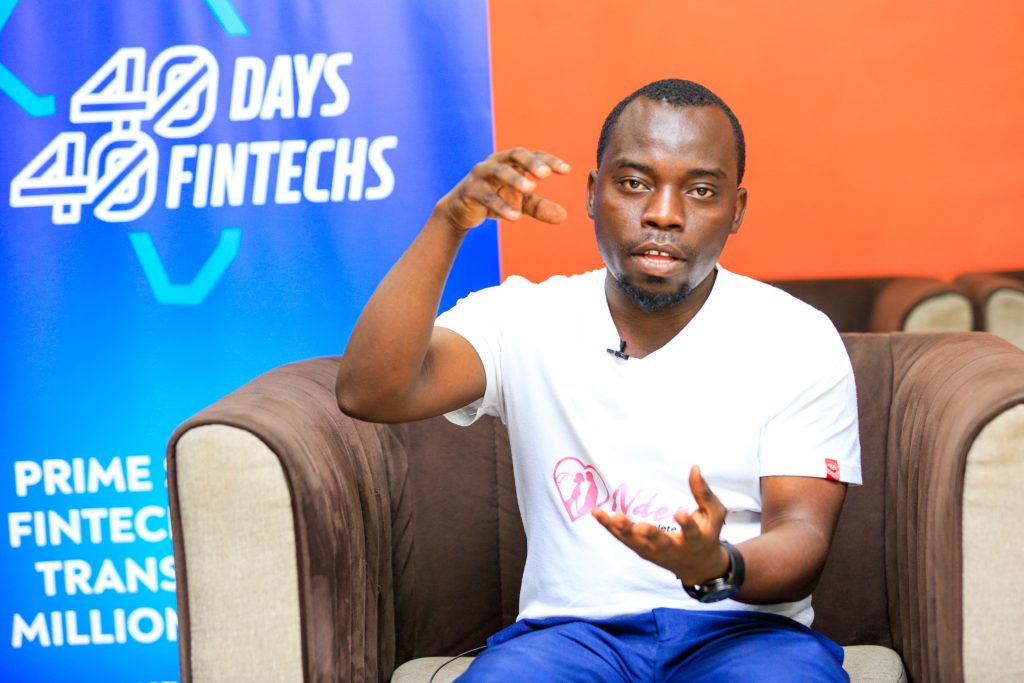
“When someone registers, they get a link which they can share on other platforms like WhatsApp. When the friends tap the link, they go to the pledges page and contribute to that cause. Those that pledge can pay in installments until they fulfill the pledge,” says Buliba Fadhili Magambo, the CEO Nderemo Company Ltd, the organization that runs the Remmo App.

The funds are collected at a central point and the person who opened the page can withdraw using mobile money or through a bank account.

“We have partnerships with mobile operators who facilitate people to pay using mobile money (M-Pesa, Airtel Money, Tigo Pesa etc) or they can pay using USSD or directly through the App from wherever they are. The money goes to our collections bank account and the person can withdraw it any time,” he adds.

Magambo says this platform is aimed at simplifying pledges and their fulfillment because sometimes people fail to contribute to social ceremonies just because they can’t make it to physical meetings.

The platform is still new on the market, having been launched at the end of 2021, but Magambo is optimistic people will adopt it with ease because of its advantages. Remmo removes the costs of soft copy-printing, distribution and validation of invitation cards; it eases management of pledges and contribution data and helps in time management by hosting virtual meetings.

Remmo is a women-centric product given that women are more involved in preparation of social ceremonies than men.

Magambo meanwhile says one of the biggest challenges they have faced is the reluctance of big FinTech players such as banks and telecoms to avail their API infrastructure to FinTech startups.

He is however very grateful to the 40 Days 40 FinTechs platform for reaching out to emerging FinTechs across East Africa to showcase their unique stories.

The 40 Days 40 FinTechs initiative is organized by HiPipo in partnership with Level One Project, Mojaloop, ModusBox, and Crosslake Technologies with support from the Gates Foundation.

“This platform is good for FinTechs especially startups. It gives us the channel to air our creativity,” Magambo says.

Based in Tanzania, Remmo is the 46th participant in the third edition of #40Days40FinTechs initiative that has quickly grown into one of the world’s premier showcase events for the innovations that are enabling more people to join the digital economy space.

This year’s edition targets Digital Innovators and FinTechs around East Africa. The 40 Days 40 FinTechs initiative offers participants useful tools and an introduction to the industry’s emerging technologies, such as Mojaloop Open Source Software, and guidance from Level One Project foundational material. The skills gained from this initiative cover Level One Project Principles, Instant and Inclusive Payment Systems (IIPS), Inclusive Finance and FinTech in general.

According to HiPipo CEO Innocent Kawooya, this year’s edition looks at cementing achievements of the previous editions – where over 60 FinTechs have been transformed – but also build on them to leverage digital financial inclusion in East Africa and beyond. “As HiPipo, our extensive effort and advocacy is partly for the intention of championing digital innovation and interoperable instant and inclusive payment systems (IIPS) in Africa to a point where our innovators enjoy and achieve sound profit margins to help them keep designing and deploying affordable and inclusive financial services for the poor,” Kawooya said.

Tausi is using FinTech to simplify access to finance for the informal markets

Our Reporter.

When a peacock is lying down, one can hardly appreciate its beauty. But when it stands and its wings are fully spread, it reveals one of the most beautiful color patterns. The same applies to digital data. Because data is unstructured and is everywhere, very few people get to appreciate its significance.

It is for this reason that a Tanzanian data science consultancy firm called AfroPavo Analytics introduced a product called Tausi, to reveal the beauty of Data.

Tausi, which means Peacock in Swahili, is an intelligent credit-risk scoring engine that quantifies the creditworthiness of a consumer through formal and informal data to a consistent scoring system.

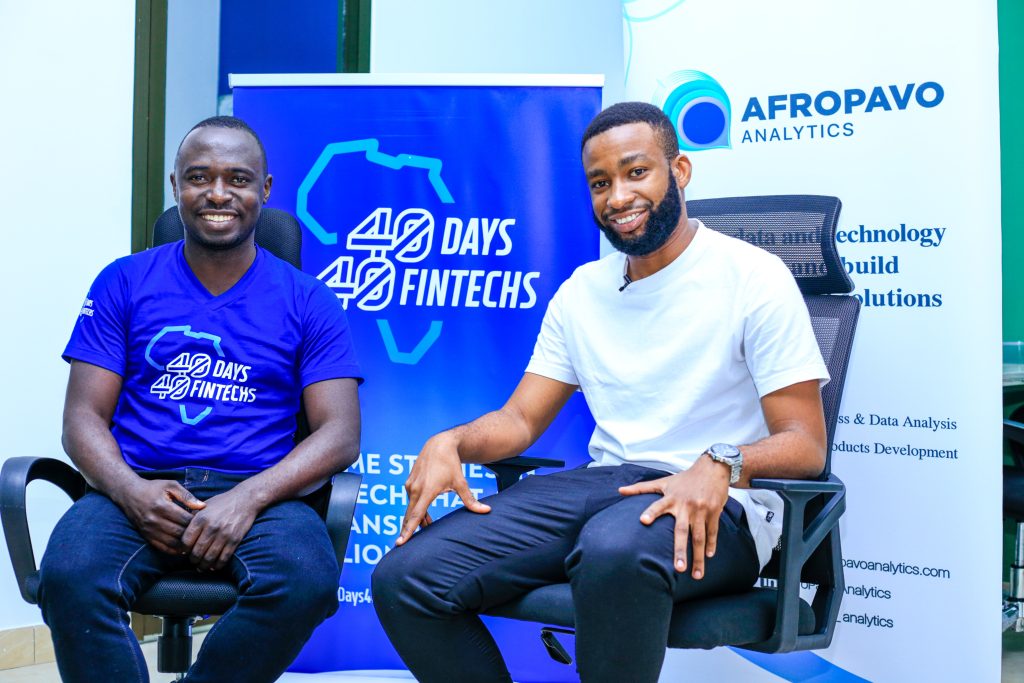
“We are a start-up and currently rolling out different solutions. The easiest entry to the market was through B2B because it is easier to deal with clients [already] in this market. Most of our impact has been by enabling other FinTechs and other financial service providers to actually provide services and we are doing this through our model of credit scoring,” says Derick Kazimoto, the co-founder and CEO of AfroPavo analytics, the company that owns Tausi.

Besides the B2B approach, Tausi also has the B2B2C approach whereby they create products and then partner with mobile network operators and banks to deploy them to the market, with the sole objective of increasing the financial inclusiveness of people.

Some of their products include micro and small consumer loans, E-Money overdrafts, mobile money and agent banking loans, and airtime loans among others.

“One of our clients is trying to become a tiered bank and we are consulting to form a system that will impact more than 8 million people. We are also in partnership with mobile operators and banks to deliver a product in the market that will impact women. It is a product that will promote saving among women,” Kazimoto says.

The State of FINTECH in Tanzania.

Based in Tanzania, Tausi by AfroPavo Analytics is the 45th participant in the third edition of the 40 Days 40 FinTechs initiative organized by HiPipo in partnership with Mojaloop, ModusBox, Level One Project, and Crosslake Tech and with support from the Gates Foundation to shine a light on emerging FinTechs in East Africa.

Kazimoto says Tanzania has a very promising FinTech industry because of the strength of the country’s mobile money operators like M-Pesa and Airtel Money.

He however points out the challenge of affordability given that the majority of the people in Tanzania can only afford feature phones, thus unable to access app-based products.

“When you have a product that is not based on USSD, you are in trouble. Everything you develop has to be based on USSD for success. The opportunity that comes with it is if you have a good enough innovation, you can get integrated with a mobile network operator as a young innovator whereby at the end of the day you don’t need to onboard one million people onto your product. You will use the data of the mobile operator.”

Kazimoto further thanked HiPipo for the 40 days 40 FinTechs initiative that enables startups to tell their stories and probably inspire others.

“When stories are told, it helps someone else. I am here today because someone else told their story. We tell our stories to inspire the younger generation to come up with better things. East Africa has very many talented people. Through collaboration, we can make this region better,” he notes.

Meanwhile, HiPipo CEO Innocent Kawooya applauded Tausi for championing data analytics, an area that has not been targeted by most FinTechs.

 “As HiPipo, our extensive effort and advocacy is partly for the intention of championing digital innovation and interoperable instant and inclusive payment systems (IIPS) in Africa to a point where our innovators enjoy and achieve sound profit margins to help them keep designing and deploying affordable and inclusive financial services for the poor,” he said.

The #40Days40FinTechs platform is run under HiPipo’s Include Everyone program that also encompasses other initiatives such as FinTech Landscape Exhibition, Women in FinTech Hackathon, Summit & Incubator and the Digital and Financial Inclusion Summit and Digital Impact Awards Africa. It offers participants useful tools and an introduction to the industry’s emerging technologies, such as Mojaloop Open Source Software, and guidance from Level One Project foundational material. The skills gained from this initiative cover Level One Project Principles, Instant and Inclusive Payment Systems (IIPS), Inclusive Finance, and FinTech in general.

Bizzyn is providing digital and financial technology solutions to Tanzanian SMEs

Our Reporter.

One of the biggest challenges faced by start-up businesses is poor record keeping, which results in the inability to make proper business analyses. The other key challenge is managing payments and money in general.  

It is these problems that prompted Emmanuel Kimaro, to start Bizzyn, a business management tool that enables users in accounting, inventory, payroll, tax filing, invoicing, bank account tracking and reconciliation, expense management, budgeting, payment processing, and accounts receivable and accounts payable management.

According to Emmanuel Kimaro, the Bizzyn founder and CEO, the company gives power to business owners, especially Small and Medium Enterprises, to fully take control of their business using a swift digital tool that acts as a substitute for paperwork.

“With Bizzyn you can send an invoice to a client and digitally receive the payment for that invoice. We are making SMEs get paid ten times faster than before,” Kimaro says.

Founded in 2020, Bizzyn has become a much-sought-after tool in Tanzania, with more than 220 SMEs already using this tool.

“We are now working hard to scale into other East African countries. We have resellers in other markets like Kenya, Malawi, Nigeria, and South Africa. So, with that growing number of clients, we project that our annual turnover will increase rapidly. We want to impact as many SMEs as possible,” he says.

Kimaro notes that one of their cardinal objectives is women empowerment, and this is achieved by targeting women-led SMEs.

“In Dar es Salaam, about 60-70 percent of SMEs businesses are run by women. So, we believe that when we impact these SMEs we are impacting women, their families, and the whole society.”

Although Kimaro credits the Tanzanian government and financial service providers for supporting and partnering with FinTechs respectively, he wants the government to loosen up on the requirements one needs to get a FinTech license.

He is however optimistic that the FinTech industry in Tanzania and East Africa, in general, is riding an upward trajectory, especially with the support of initiatives like the 40 Days 40 FinTechs.

“One of the issues that most Africans miss is Pan-Africanism…we have been relying on people from outside the continent to come and tell our story. But when we get the opportunity with HiPipo 40 Days 40 FinTechs, it is superb. It is something we have been missing. We will reach further,” he says.

40 Days 40 FinTechs

Based in Tanzania, Bizzyn is the 44th participant in this year’s 40 Days 40 FinTechs initiative that seeks to shine a light on the unique innovations that are enabling ever more people to join the digital economy space.

The initiative is run under HiPipo in partnership with the Level One Project, Mojaloop, ModusBox, and Crosslake Technologies, and is supported by the Gates Foundation.

According to HiPipo CEO, Innocent Kawooya, digital innovators and FinTechs around East Africa have embraced Season three which has already covered Uganda, Kenya, and Tanzania participants.

“We are very happy that FinTechs in the East African region have taken up this opportunity to showcase how they are solving everyday problems using Level One Project principles,” he said.

Kawooya added that this year’s edition has cemented the achievements of the previous editions – where over 60 FinTechs were transformed – but also built on them to leverage digital financial inclusion in East Africa and beyond.

“As HiPipo, our extensive effort and advocacy is partly for the intention of championing digital innovation and interoperable instant and inclusive payment systems (IIPS) in Africa to a point where our innovators enjoy and achieve sound profit margins to help them keep designing and deploying affordable and inclusive financial services for the poor,” he said.

The #40Days40FinTechs platform is run under HiPipo’s Include Everyone program that also encompasses other initiatives such as FinTech Landscape Exhibition, Women in FinTech Hackathon, Summit & Incubator, the Digital and Financial Inclusion Summit and Digital Impact Awards Africa.

It offers participants useful tools and an introduction to the industry’s emerging technologies, such as Mojaloop Open Source Software, and guidance from Level One Project foundational material. The skills gained from this initiative cover Level One Project Principles, Instant and Inclusive Payment Systems (IIPS), Inclusive Finance and FinTech in general.

Nomanini is using FinTech to connect over 15,000 retailers to consumers

Our reporter.

Nomanini is a South Africa-founded payments platform that connects financial service providers and fast-moving consumer goods companies to consumers. Founded in 2011, Nomanini, which means ‘anytime’ in the ‘Siswati’ language, started out as a point-of-sale gadget distributor to retailers where they could be able to sell airtime to customers. It has since expanded to offer a wide range of financial services in Zambia, Kenya, and beyond.

Our team talked to Paul Nyamweya, Nomanini’s Regional Partnerships Manager for East Africa. He explained the evolution of Nomanini, challenges, and opportunities.

QN: It is more than 10 years since you came into existence: how has the journey been?

ANS: It has been great, full of growth and progress but not without challenges. Having started with just a point-of-sale gadget, eventually, we were able to develop a wide-labeled application where retailers could download the app and be able to provide the same service that the gadget was able to do. Over time, we have been able to expand and partner with banks such as Moza Banco in 2015 and Standard Bank in 2019 to provide solutions relevant to informal retailers. In 2021, we partnered with another bank and have been able to extend our presence to Zambia, Lesotho, Ivory Coast, and Tanzania and now rolling out in Kenya.

QN: What are your flagship services?

ANS: We offer a wide range of value-added services. Once a retailer is registered with us, you can be able to buy air time, electricity, pay bills; and for retailers, if we have a history of their transactions, they can get float loans.

The other one we are rolling out is the supply chain finance solution…where we partner with financial services providers and Fast-Moving Consumer Goods (FMCG) companies to provide what we call stock advances to informal retailers.

Then there is another one called Umoja, where we basically integrate with an aggregator where we buy airtime in bulk from mobile service providers and be able to cascade them down to retailers.

QN: How are the numbers looking like?

ANS: So far, cumulatively we are at about 15,000 retailers registered on the platform with over 3.3 million dollars in loans given to customers. We have processed over 42 million transactions so far.

QN: How are you ensuring gender equality and usability in service provision?

ANS: When you talk about informal trade retailers, many of them are actually women that run them. When you talk about small businesses like salons, barber shops, they are mainly run by youths. So, we are supporting a lot of them. Women and youth are the most vulnerable…When we support these businesses, they are the ones we help grow their businesses.

Our technology is advanced in terms of usability. Most of our transactions are real-time and in terms of KYC (Know-Your-Customer), we do elaborate KYC of at least what is relevant to what we need in terms of collecting customer information. Most of this information is protected because we sign Non-Disclosure Agreements so that we use it for what it must be used for.

QN: What is your assessment of FinTech in Kenya?

ANS: Kenya is considered a hotbed for FinTech. It is actually a global hub because of the pioneering work that has been done in this country such as M-Pesa and mobile penetration because most of these solutions are through the mobile phone. There are a lot of innovations in this country that have propelled the FinTech industry. So, there are massive opportunities not just in Kenya but across the region. A lot of innovators are creating their own mobile solutions or partnering with FinTechs so that they can be able to access more points of representation.

QN: How do you rate the 40 Days 40 FinTechs initiative and what can be improved?

ANS: The 40 days 40 FinTechs initiative is great because it creates awareness on what the FinTech ecosystem has to offer…We have made great steps but there is still a lot of ground to cover. If you are talking about 10 million informal retailers in Sub-Saharan Africa, this initiative is creating that awareness that these opportunities are there that can help small retailers and small businesses to take advantage to grow their businesses and change their lives.

What else can we do? …Actively bringing together the different players as well as investors, financial service providers, and the FMCG companies to talk and see how we can grow together.

40-Days 40-FinTechs.

Nomanini is the 43rd participant in this year’s 40 Days 40 FinTechs platform.

The initiative is run under HiPipo’s Include Everyone program that also encompasses other initiatives such as FinTech Landscape Exhibition, Women in FinTech Hackathon, Summit & Incubator and the Digital and Financial Inclusion Summit and Digital Impact Awards Africa.

Now in its third edition, #40Days40FinTechs has quickly grown into one of the world’s premier showcase events for the innovations that are enabling ever more people to join the digital economy space. That is surely going to remain the case, in large part due to the inspiration and collaboration that our partners; Level One Project, Mojaloop, ModusBox, and Crosslake Technologies generate, but mostly because of the continuing, generous support of the Gates Foundation.

The initiative offers participants useful tools and an introduction to the industry’s emerging technologies, such as Mojaloop Open Source Software, and guidance from Level One Project foundational material. The skills gained from this initiative cover Level One Project Principles, Instant and Inclusive Payment Systems (IIPS), Inclusive Finance, and FinTech in general.

According to HiPipo CEO Innocent Kawooya, this year’s edition has cemented the achievements of the previous editions – where over 60 FinTechs have been transformed – but also building on them to leverage digital financial inclusion in East Africa and beyond.

“As HiPipo, our extensive effort and advocacy is partly for the intention of championing digital innovation and interoperable instant and inclusive payment systems (IIPS) in Africa to a point where our innovators enjoy and achieve sound profit margins to help them keep designing and deploying affordable and inclusive financial services for the poor,” Kawooya said.